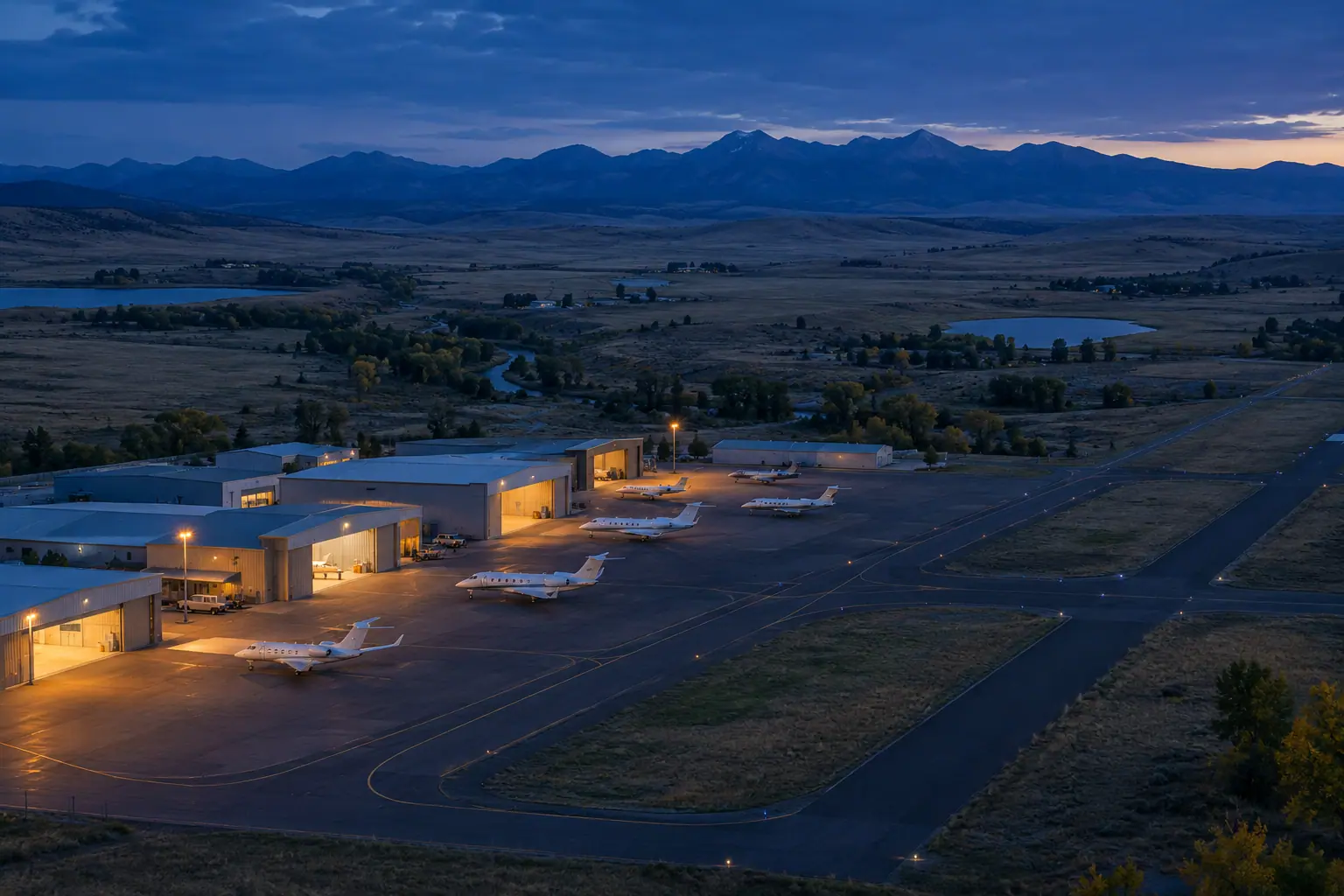
Private Jet Charter Airports Denver
Private jet charter airports Denver flyers use start with Centennial and Rocky Mountain Metro. Centennial's field elevation is 5,885 feet, so summer density altitude hits 9,200 feet. This guide covers the four fields we book most.
- Main page
- Airports
Denver gives you real choices, and they are not interchangeable. Centennial (KAPA) is the busiest general aviation field in the region and the one most charter customers ask for, with three FBOs on the field and a 10,001-foot runway. Rocky Mountain Metropolitan (KBJC) up in Broomfield is a strong alternative when Centennial is stacked, and it carries a 9,000-foot runway with Signature and Sheltair handling. Denver International (KDEN) has the 16,000-foot runway but no dedicated FBO for charter, so it is rarely the convenient pick unless the airline side of your trip matters. Buckley Space Force Base is an active military installation and not a general charter destination.
We act as your broker, not the operator. Every flight we arrange is flown by an FAA Part 135 operator that holds operational control, and we work under DOT Part 295 as an agent. That structure matters when weather moves in, because the operator makes the go or no-go call and we translate it for you.
Pricing across these airports is close, but not identical. A light jet from Denver to Phoenix runs about $6,000 to $9,000, and the same aircraft may cost slightly more from Centennial than from Rocky Mountain Metro because of fees and taxi time. We quote the all-in number so you can compare apples to apples.
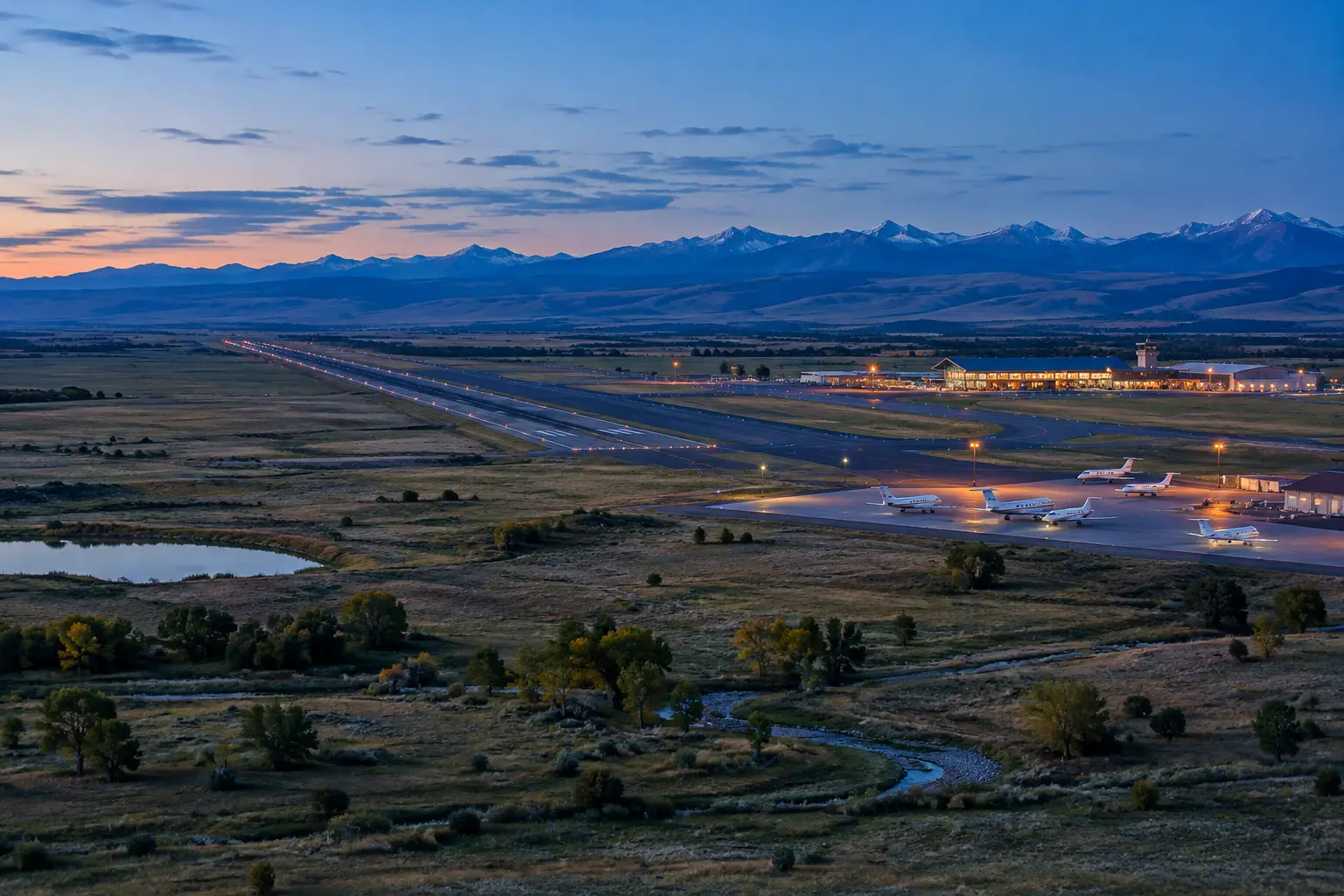
Buckley Space Force Base
- KBKF code
- 5,662 ft field elev
1 runways, longest 11,006 ft. 13 miles to Downtown Denver.
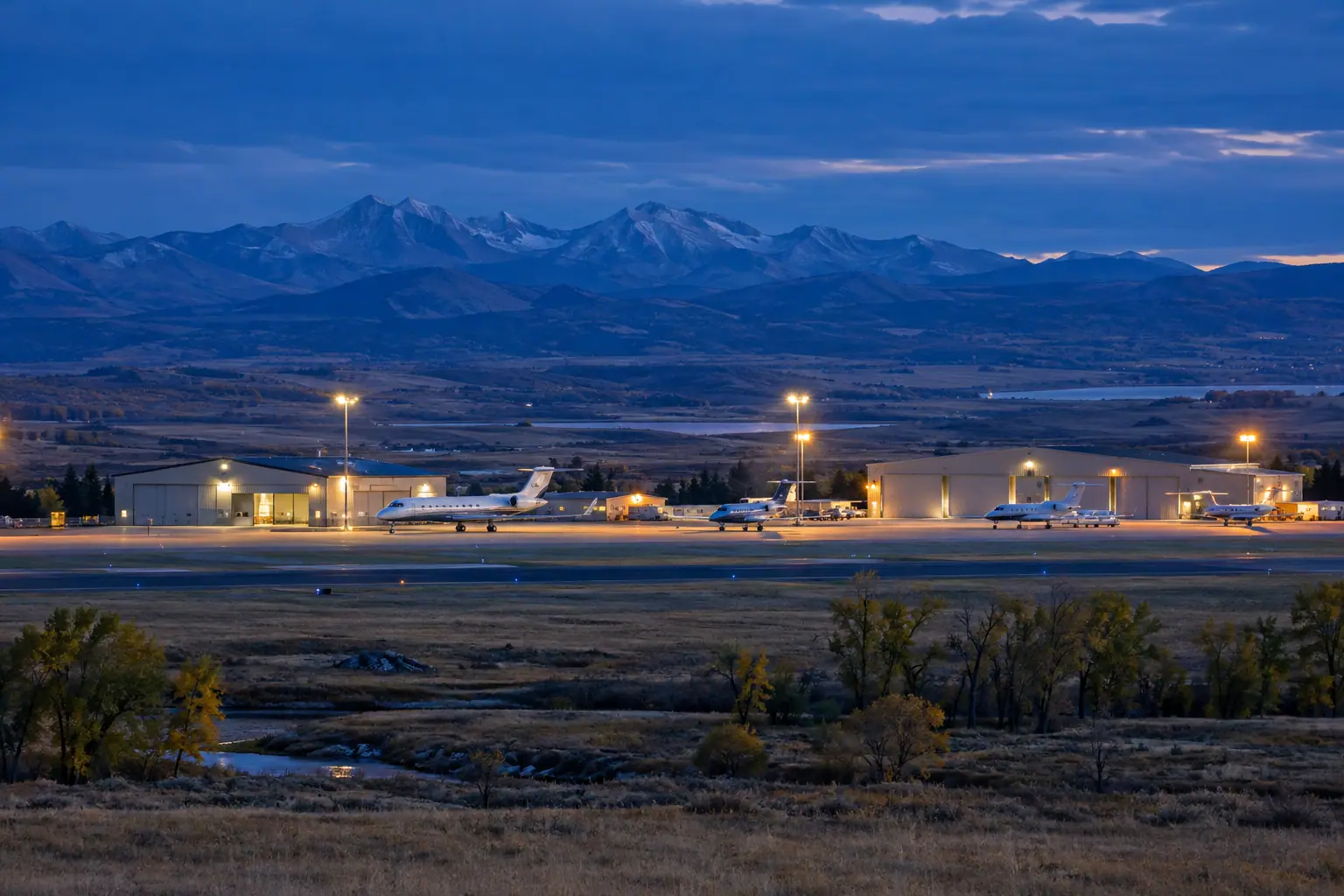
Rocky Mountain Metropolitan Airport
- KBJC code
- 5,673 ft field elev
3 runways, longest 9,000 ft. 14 miles to Downtown Denver. FBO: Signature Aviation, Sheltair, Signature Aviation - North.
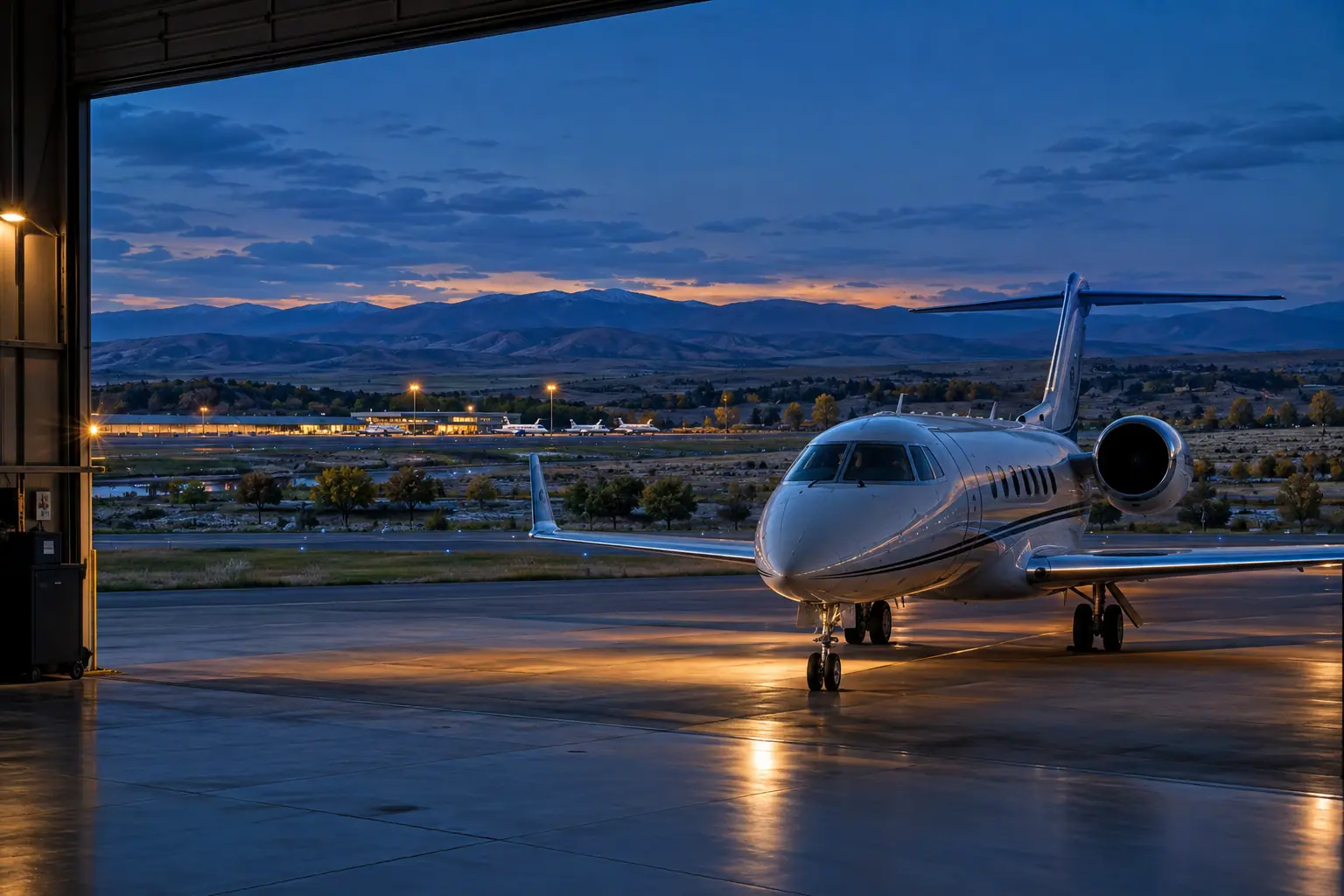
Centennial Airport
- KAPA code
- 5,885 ft field elev
3 runways, longest 10,001 ft. 14 miles to Downtown Denver. FBO: jetCenters of Colorado, Modern Aviation, Signature Aviation - North.
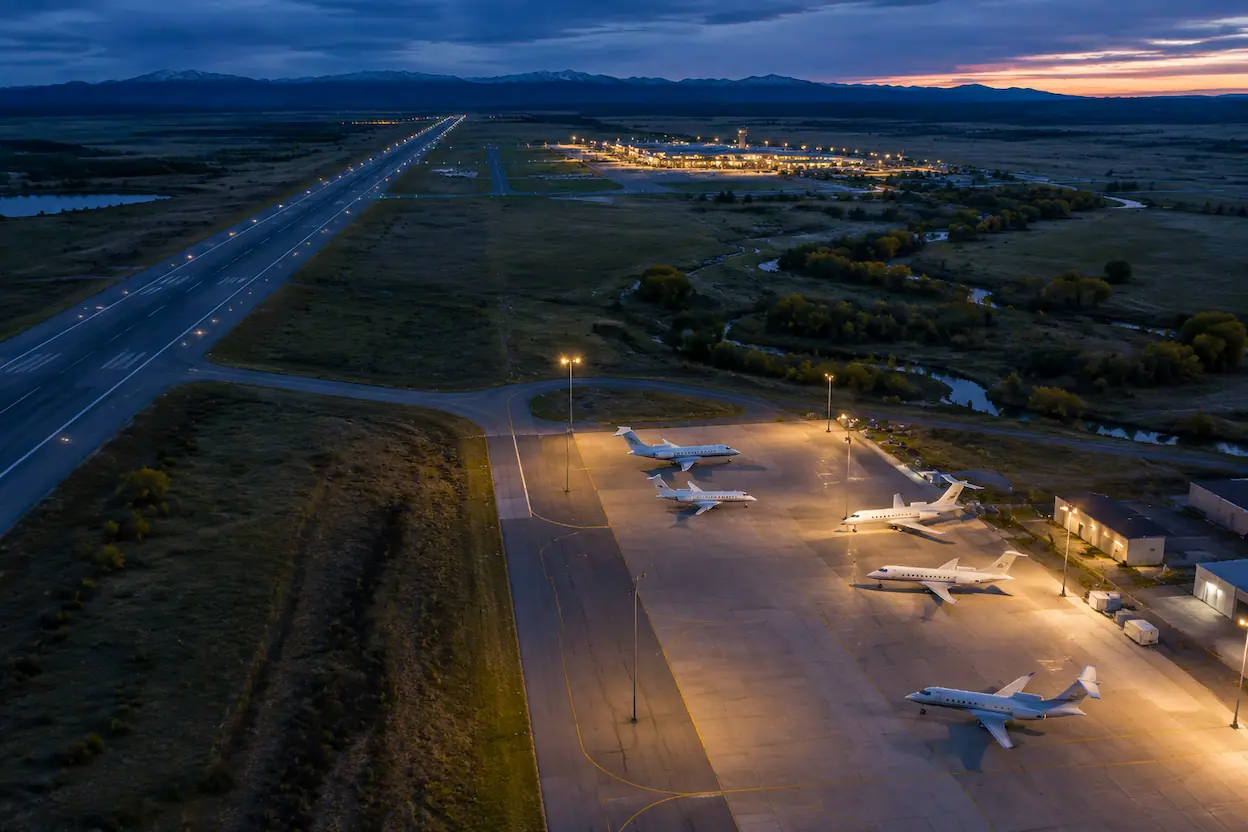
Denver International Airport
- KDEN code
- 5,431 ft field elev
6 runways, longest 16,000 ft. 18 miles to Downtown Denver.
Private jet charter airports Denver
Centennial sits 611 miles from the strip and handles most light and midsize jets, but its 5,885-foot elevation means a light jet leaves with less fuel on a hot July afternoon. Rocky Mountain Metro is 606 miles out with a 5,673-foot elevation and a 9,000-foot runway, so the runway length at Rocky Mountain Metro favors heavier jets on summer nonstops. Denver International has the longest runway in the region at 16,000 feet and a lower 5,431-foot elevation, so heavy jets flying international legs often prefer Denver International for the runway margin. The trade-off is ground time. Centennial and Rocky Mountain Metro put you on the airplane quickly, while KDEN means a longer taxi and a terminal experience built around airlines. If your party is flying heavy equipment to Europe, then Denver International's runway is worth the extra ground time. For a Dallas or Phoenix run, it is not. When you need a quick turn from a Denver airport, then Centennial or Rocky Mountain Metro will usually save you time on the ground.
| Airport | Field elev | Longest runway | Into Downtown Denver | DA in July |
|---|---|---|---|---|
| Buckley Space Force Base | 5,662 ft | 11,006 ft | 13 mi | 9,000 ft |
| Rocky Mountain Metropolitan Airport | 5,673 ft | 9,000 ft | 14 mi | 9,000 ft |
| Centennial Airport | 5,885 ft | 10,001 ft | 14 mi | 9,200 ft |
| Denver International Airport | 5,431 ft | 16,000 ft | 18 mi | 8,700 ft |
How summer heat affects departures
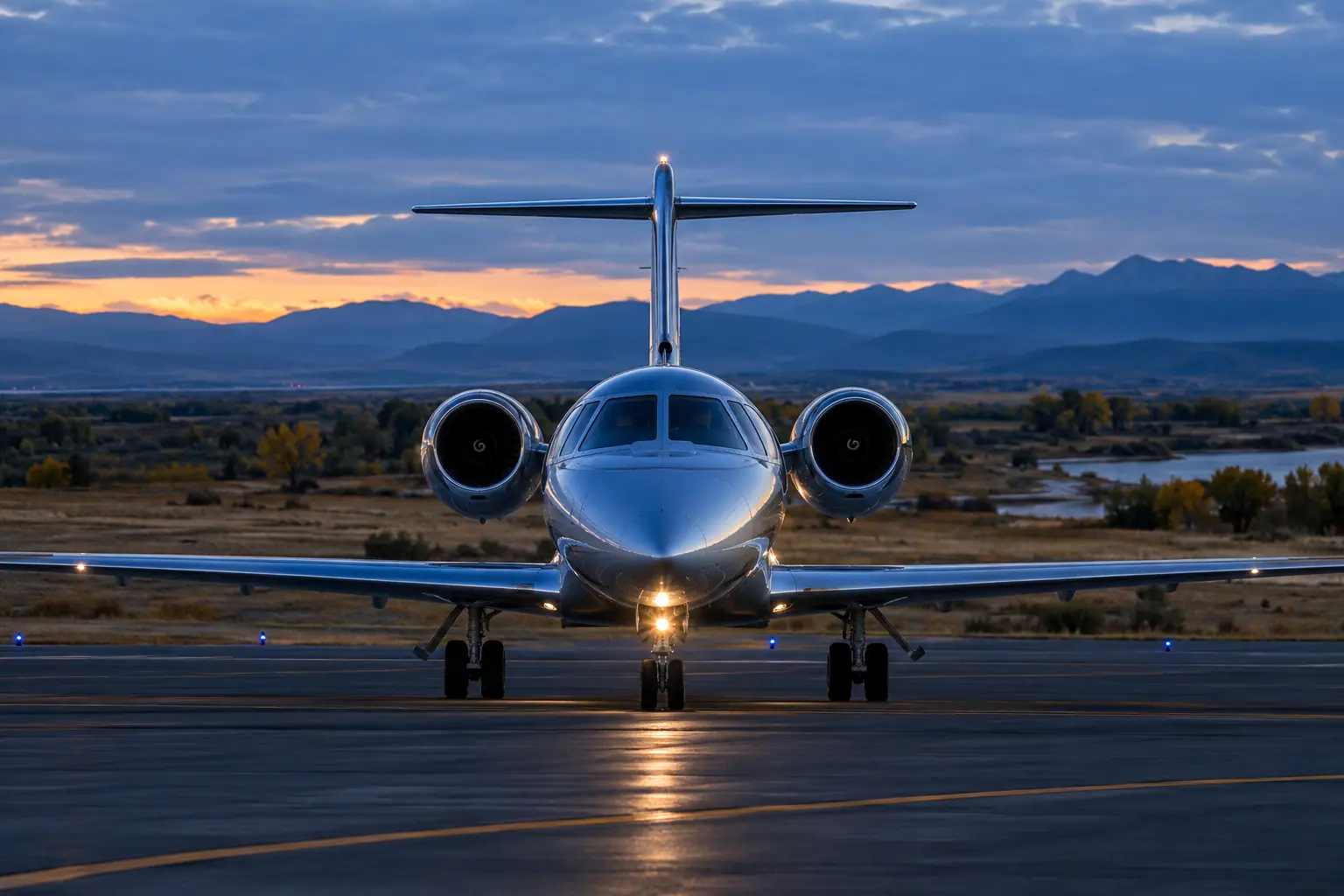
July density altitude at Centennial reaches 9,200 feet, so a light jet departing Centennial in July may need a fuel stop on a long western route. Peak afternoon readings at 115F push it to 9,800 feet, which is where payload restrictions bite hardest. Rocky Mountain Metro and Buckley both hit 9,500 feet at that same peak, and Denver International lands at 9,200 feet. When you book a morning departure from Rocky Mountain Metro, you leave in cooler air with more margin.
Plan early departures in June through August. If your group is heavy or the route is long, then we may quote a midsize or super-midsize instead of a light jet, and the price difference is real: midsize hourly rates start around $5,200, while light jets run $3,800 to $5,800. Turboprops handle short regional legs well but lose cruise speed at 300 knots, so they are a poor fit for anything beyond the Mountain West. If you are flying to the East Coast from Denver, then a light jet's range of 1,400 nautical miles will not cover it without a stop, so plan on a midsize or larger.
Questions
Which private jet charter airports Denver flyers actually use?
Centennial and Rocky Mountain Metropolitan carry most of the traffic. Centennial has a 10,001-foot runway at 5,885 feet elevation and three FBOs. Rocky Mountain Metro has a 9,000-foot runway at 5,673 feet. Denver International is available but has no dedicated charter FBO, and Buckley Space Force Base is an active military field.
How much does a light jet cost from Denver to Phoenix?
Budget roughly $6,000 to $9,000 for a light jet on the 505-nautical-mile run, about 1 hour 32 minutes in the air. These are estimates, and the final quote depends on the operator, the date, and how much fuel the airplane can carry out of a high-elevation field in summer heat.
Will summer density altitude limit my departure from Centennial?
Yes, sometimes. July density altitude at Centennial runs about 9,200 feet and can reach 9,800 feet on a 115F afternoon. Light jets with full tanks and a full cabin may face payload limits, so we often shift to a morning departure or quote a midsize with better hot-and-high performance.
Can I fly internationally from Denver on a private jet?
Yes. Denver to Cabo San Lucas is 1,025 nautical miles, about 2 hours 48 minutes in a light jet, and Nassau runs 1,630 nautical miles at roughly 5 hours 2 minutes. International legs require CBP clearance, so we build the customs stop and passenger manifest into the schedule before you book.
Who is responsible for the safety of my charter flight?
The FAA Part 135 operator holds operational control and is responsible for the crew, the aircraft, and the go or no-go decision. We vet operators and arrange the trip as your agent under DOT Part 295. Ask for the operator's certificate number and recent FAA records before you sign anything.
How much lead time do I need for a heavy jet out of Denver?
Heavy jet hourly rates run about $9,500 to $14,500, and availability tightens fast in ski season and around major Denver events. Give us several days for a heavy jet and longer for international legs that need CBP coordination. Same-week requests are possible on light and midsize aircraft but limited.