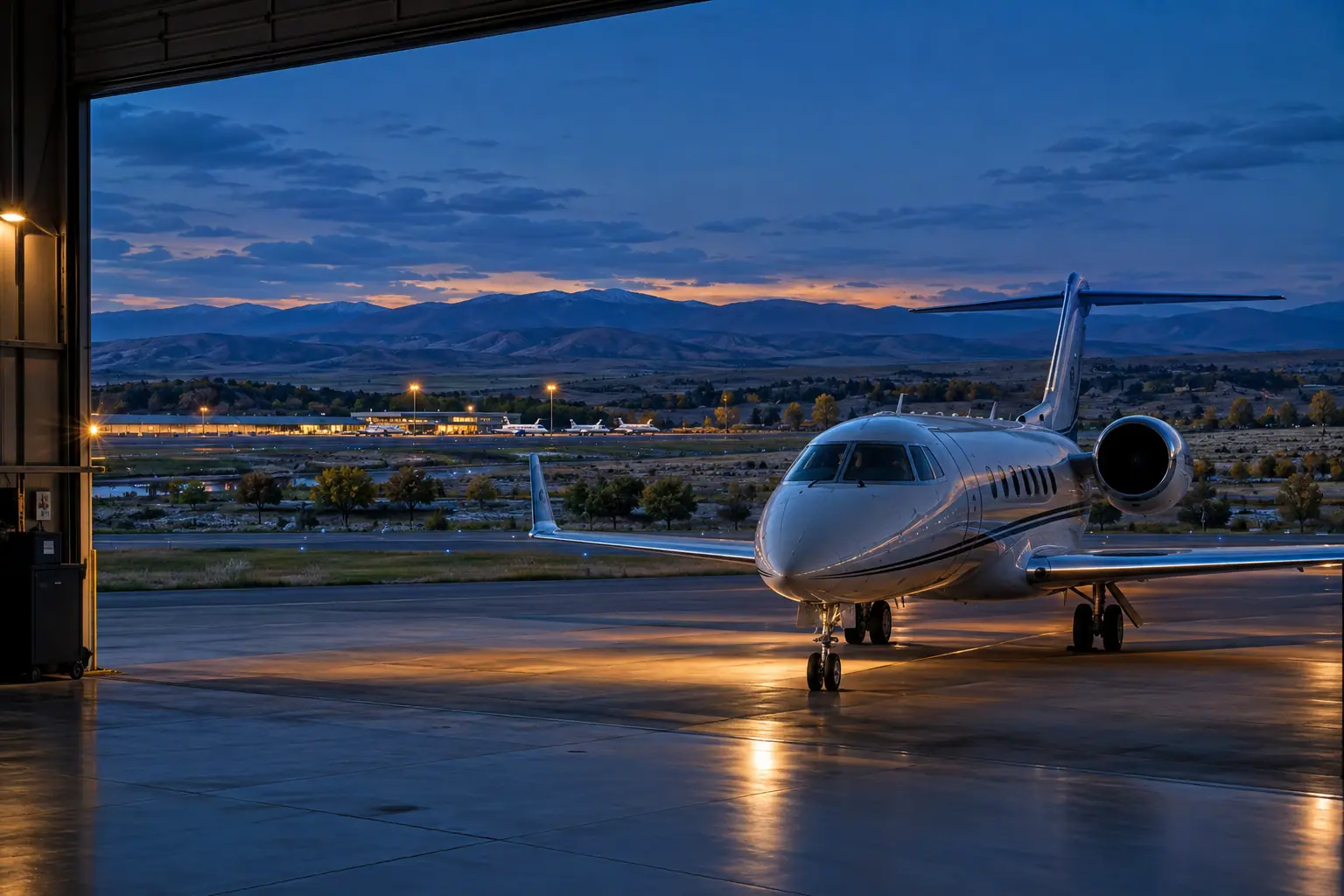
Private jet charter Centennial
Private jet charter Centennial means using Centennial Airport (KAPA) for south Denver. It sits at 5,885 feet with a 10,001-foot runway. Summer density altitude can reach 9,200 feet.
- KAPA · APAairport codes
- 5,885 ftairport elevation
- 10,001 ftmax strip length
- 14 mito Downtown Denver
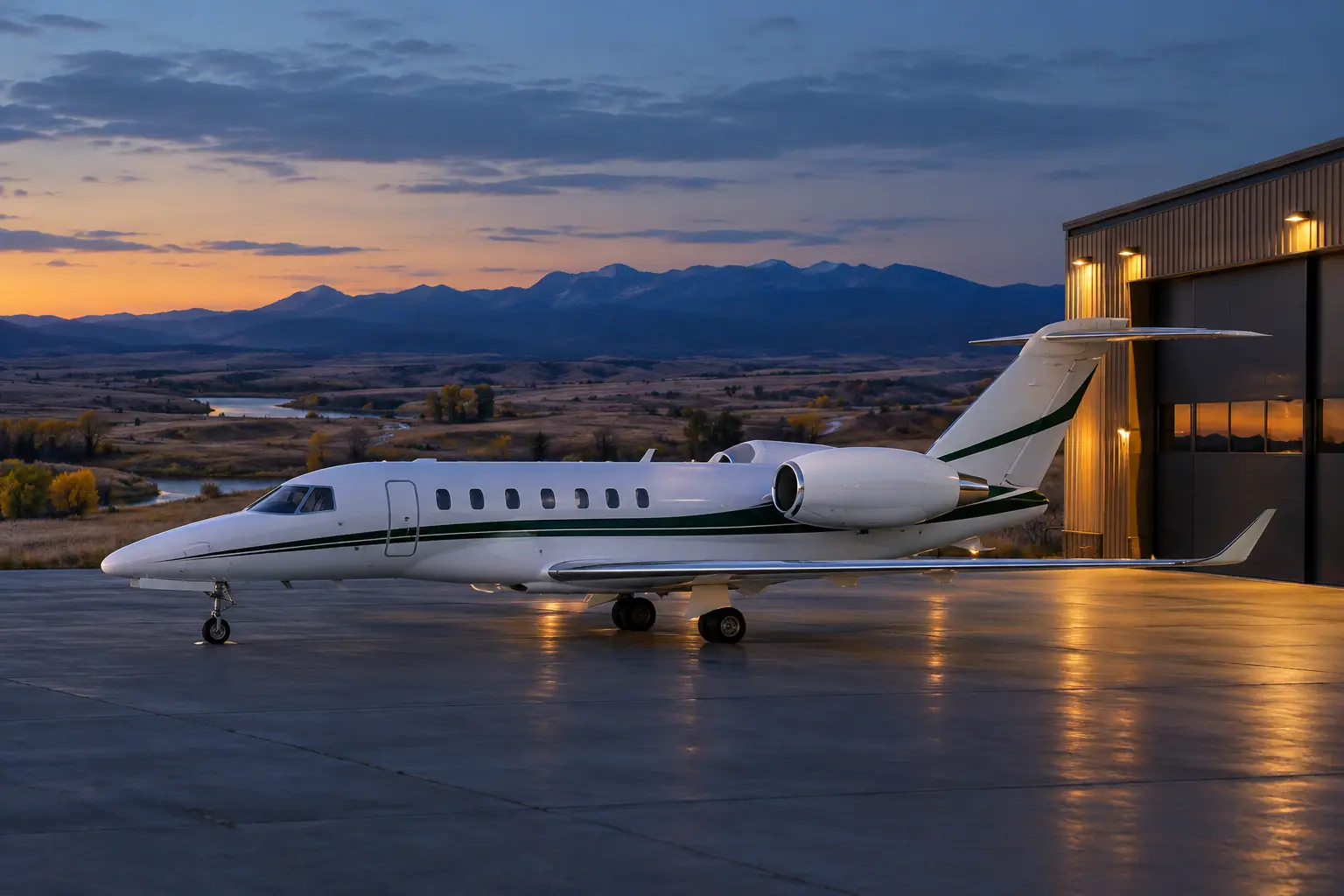
Centennial Airport (KAPA) is the general aviation field that serves Denver's southern suburbs, and a private jet charter Centennial booking usually means a light or midsize jet that can clear the high-altitude performance limits here. The field sits at an elevation of 5,885 feet and its longest runway runs 10,001 feet, which is enough for most midsize and super-midsize aircraft under normal conditions. The trade-off is heat: density altitude. On a hot July afternoon the effective altitude can read around 9,200 feet, and at the extreme of 115F it can exceed 9,800 feet. That thin air reduces climb performance and payload, so operators may limit fuel or passenger count on a given leg. Ask for the performance numbers, not just the price.
For a charter broker, Centennial is one of four fields in the metro that can work, alongside Rocky Mountain Metropolitan (KBJC), Buckley Space Force Base (KBKF) and Denver International (KDEN). Each has its own trade-offs. Centennial is closest to the Tech Center and the southern suburbs, but its runway and density-altitude profile narrows the aircraft list on hot days. Rocky Mountain Metropolitan sits at 5,673 feet with a 9,000-foot runway, so it is the more forgiving option for heavier jets and longer nonstop legs. Denver International has the longest runway at 16,000 feet and the most airline traffic, which means more ground congestion. Buckley is a military field and is not a normal civil charter option. When you compare quotes for private jet charter Centennial, ask which airport the operator is actually pricing, because the field changes the aircraft and the cost.
Because charter brokers act as agents under DOT Part 295, we do not fly the aircraft. The flights themselves are flown by FAA Part 135 operators who hold operational control, and that distinction matters when weather or a mechanical issue forces a change. Ask who the operator is, what their certificate covers and what their cancellation policy says before you commit. On a high-elevation field like this, the operator's experience with mountain airports and summer density altitude is worth as much as the hourly rate.
Centennial Airport runways and elevation
Centennial has a 10,001-foot main runway, which is sufficient for most midsize jets but not a guarantee on a hot day at 5,885 feet elevation. The longest runway at Centennial stretches 10,001 feet at 5,885 feet elevation, and that combination is what operators use when they decide whether a given jet can depart with a full load. A super-midsize or large-cabin jet may need a longer takeoff roll in July than in January, and a light jet flying a long leg may need a fuel stop it would not need from a sea-level airport. If the temperature climbs into the 90s, then the operator may reduce payload to keep the takeoff distance within limits. That is a performance calculation, not a sales tactic, and a good broker will show you the numbers before you book.
| Runway | Length | Width | Surface |
|---|---|---|---|
| 17L/35R | 10,001 ft | 100 ft | Asphalt |
| 17R/35L | 7,001 ft | 75 ft | Asphalt |
| 10/28 | 4,800 ft | 75 ft | Asphalt |
FBOs and ground handling at Centennial
Three FBOs serve general aviation at Centennial: jetCenters of Colorado, Modern Aviation and Signature Aviation - North. Each has its own ramp, lobby and handling fees, and the fee can differ by aircraft weight and by whether you are arriving or departing. jetCenters of Colorado and Modern Aviation handle most of the charter traffic at Centennial, with Signature Aviation - North as the third option on the field. Ask your broker which FBO the operator uses and what the handling charge is, because it usually shows up as a separate line on the quote. If you are connecting to a commercial flight at Denver International, then allow extra ground time: the drive between the two airports is not short, and the southern metro traffic can add to it.
Best for
- Travelers based in the Denver Tech Center, Greenwood Village, Lone Tree and the southern suburbs, who want the shortest drive to a charter field.
- Light and midsize jet trips to mountain and regional destinations where the 10,001-foot runway and the field's general aviation focus work well.
- Groups who value a smaller, less congested field than Denver International and are willing to trade some aircraft range for convenience.
- Summer trips where the operator has confirmed density-altitude performance for the specific aircraft and payload.
| Class | Typical runway need | Here |
|---|---|---|
| Turboprop | 3,300 ft+ | OK |
| Light jet | 4,000 ft+ | OK |
| Midsize jet | 5,000 ft+ | OK |
| Super-midsize jet | 5,200 ft+ | OK |
| Heavy jet | 5,600 ft+ | OK |
Weather and density altitude by season
January highs average 41F with a density altitude near 6,100 feet, while July highs average 88F and push density altitude to roughly 9,200 feet. That is the number that matters most on this field. In July, Centennial's density altitude reaches about 9,200 feet, and at the extreme of 115F it can climb past 9,800 feet. Spring is wetter, with May averaging 12 wet days, and that can mean convective weather and delays. Winter is drier but brings the occasional snow event and deicing. If your trip falls in the summer, then plan for a possible payload restriction or a different aircraft type, and confirm it with the operator before you pay a deposit. A broker who knows this field will raise it before you do.
| Month | Avg high | Wet days | DA |
|---|---|---|---|
| Jan | 41°F | 5 | 6,100 ft |
| Feb | 43°F | 6 | 6,200 ft |
| Mar | 52°F | 8 | 6,800 ft |
| Apr | 61°F | 8 | 7,400 ft |
| May | 68°F | 12 | 7,900 ft |
| Jun | 83°F | 7 | 8,900 ft |
| Jul | 88°F | 7 | 9,200 ft |
| Aug | 87°F | 7 | 9,200 ft |
| Sep | 82°F | 4 | 8,800 ft |
| Oct | 66°F | 5 | 7,800 ft |
| Nov | 52°F | 5 | 6,800 ft |
| Dec | 44°F | 4 | 6,300 ft |
Getting to Centennial Airport
Centennial Airport sits south of Denver near the intersection of E-470 and Peoria Street, roughly 611 miles from the strip landmark used in our reference data, so most travelers reach it by car from the southern metro. Centennial is about a half-hour drive from the Denver Tech Center in normal traffic, and longer during rush hour. If you are coming from downtown Denver, then allow more time and consider Rocky Mountain Metropolitan or Denver International depending on your destination. The field is not a commercial terminal, so there is no long security line, but there is also no airline counter to fall back on if your flight cancels.
Private jet routes via Centennial
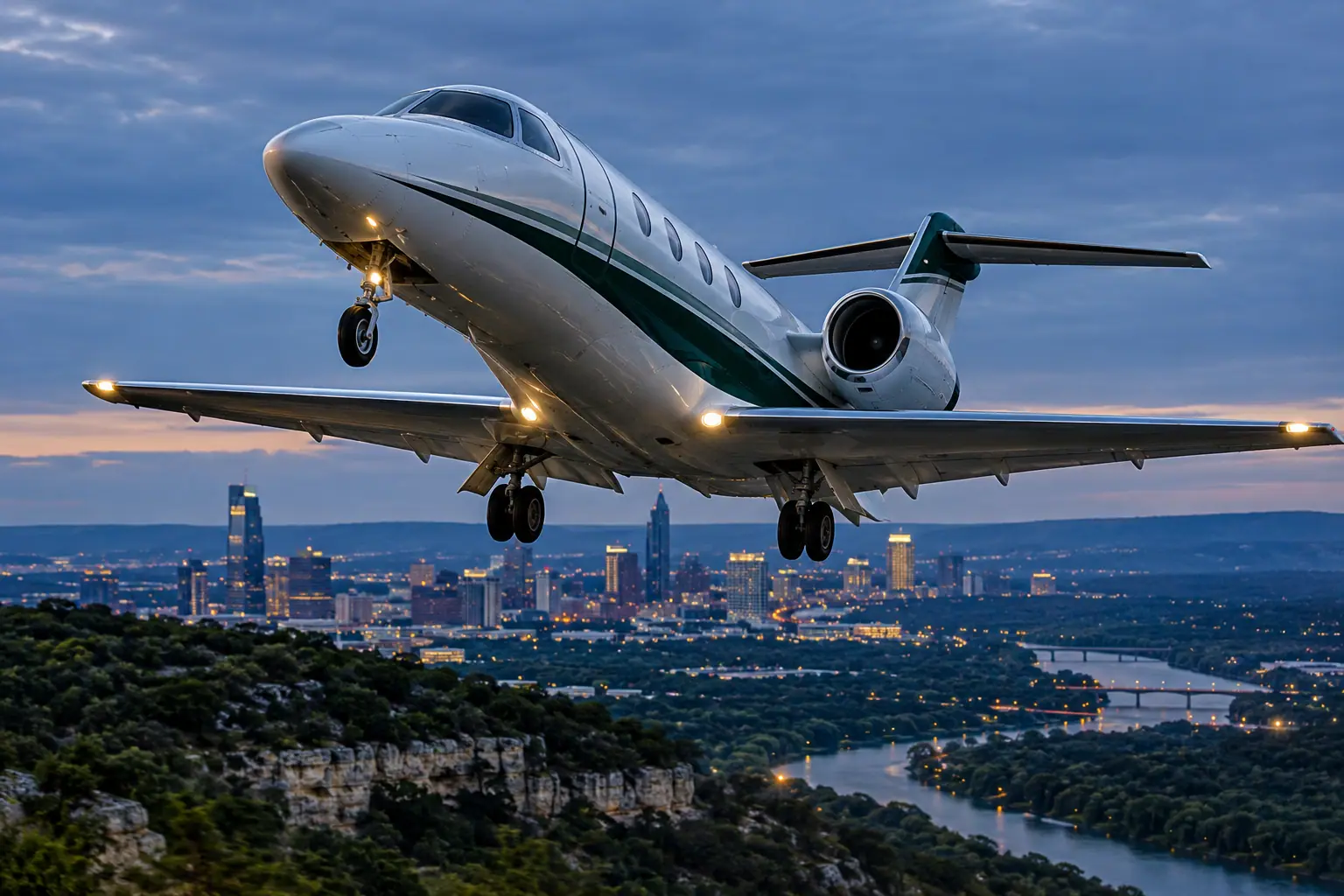
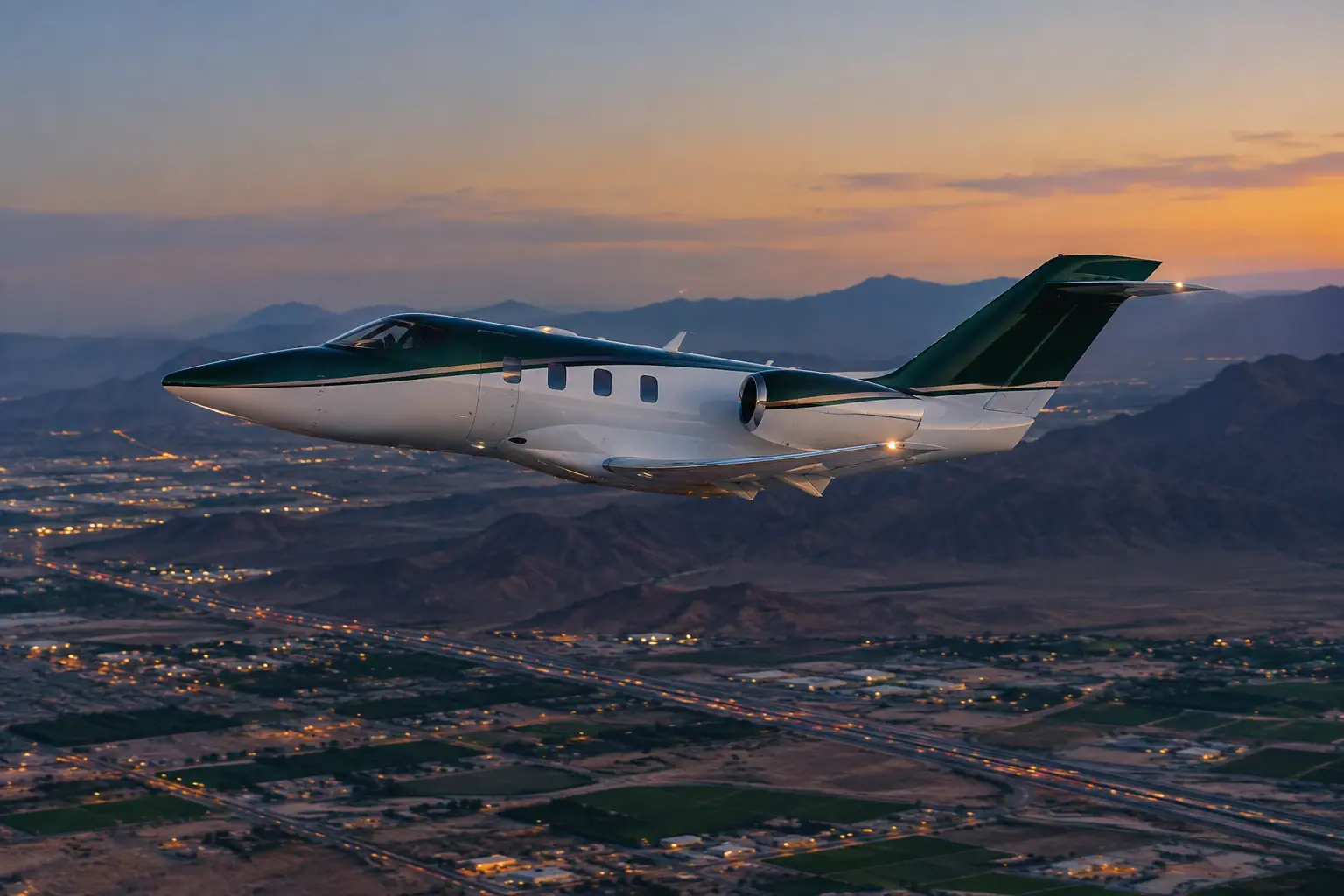
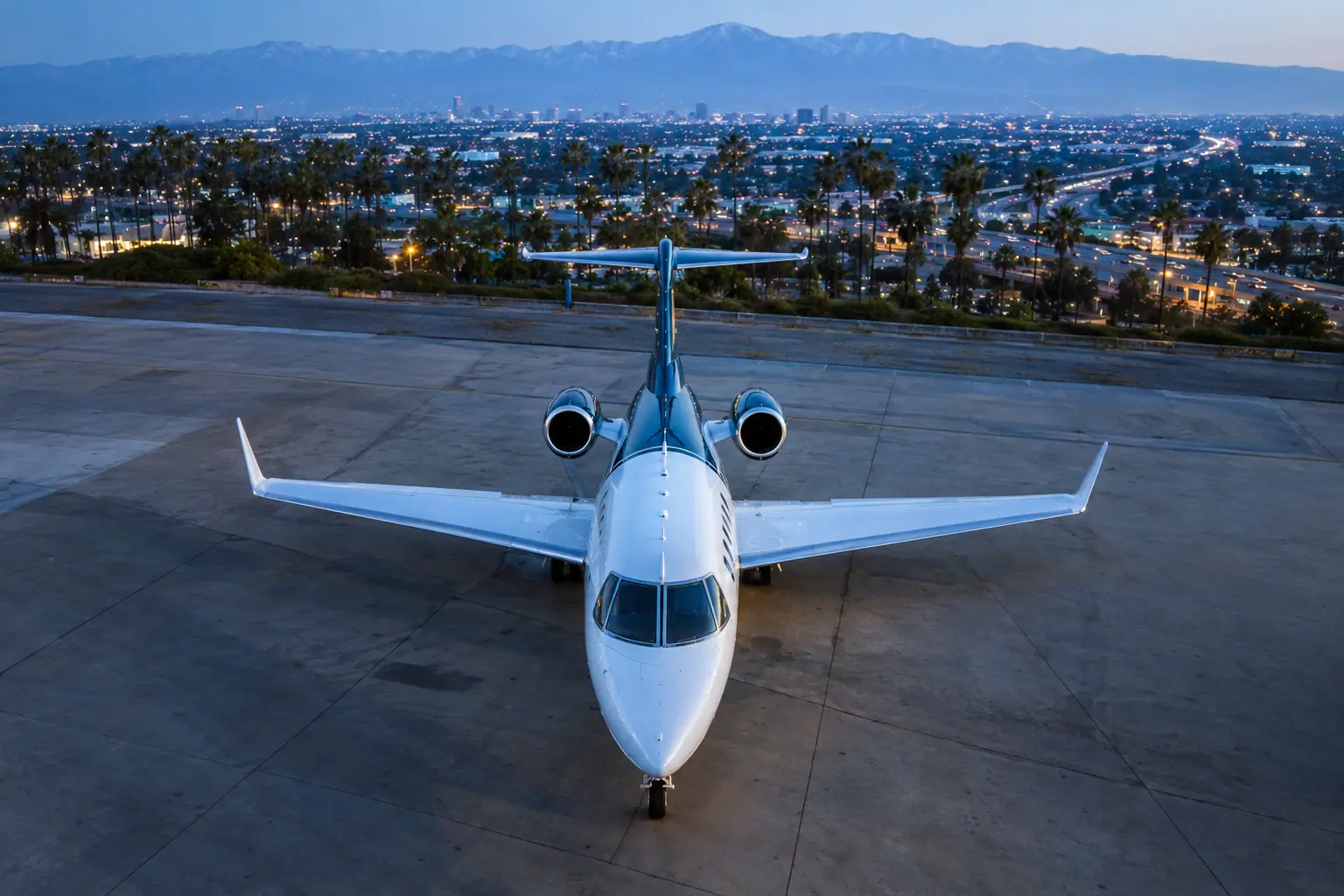
Each of these 6 private jet legs runs 505 to 1,479 nautical miles, with one-way light jet estimates from $6,000 to $27,000.

Questions about this airport
How much does private jet charter Centennial cost?
There is no single rate, because cost depends on aircraft type, distance, crew time and handling. A light jet on a short regional leg is the lowest-cost option, while a midsize or super-midsize jet on a longer trip costs more. On hot days, density altitude near 9,200 feet in July can force a fuel stop or a payload limit, which changes the estimate. Ask for an itemized quote, and treat every price as an estimate until the operator confirms it.
Why does density altitude matter at Centennial?
Centennial sits at 5,885 feet, and summer heat raises the effective density altitude to roughly 9,200 feet in July, with a peak of about 9,800 feet at 115F. Thin air reduces engine and wing performance, so takeoff distance grows and payload may be limited. Operators calculate this for each flight. If the numbers do not work for your passenger count or baggage, then a different aircraft or a different field such as Rocky Mountain Metropolitan may be the better answer.
Is Centennial Airport the same as Denver International?
No. Centennial (KAPA) is a general aviation field south of Denver with a 10,001-foot runway, while Denver International (KDEN) is the commercial airline hub with a 16,000-foot runway. Centennial is smaller and less congested, which many travelers prefer. The trade-off is aircraft range and hot-day performance. If your trip needs a large-cabin jet on a long nonstop leg, then Denver International or Rocky Mountain Metropolitan may be the more practical departure point.
Which FBOs serve private jet charter at Centennial?
Three FBOs serve the field: jetCenters of Colorado, Modern Aviation and Signature Aviation - North. Handling fees vary by FBO and by aircraft weight, and they usually appear as a separate line on your quote. Ask your broker which FBO the operator uses and what the charge is, because it is easy to compare hourly rates and miss the ground costs. If you are arriving from an international leg, then customs clearance is handled through CBP at an airport that supports it, so confirm that routing in advance.
Who operates the flights, and who is responsible?
The flights are flown by FAA Part 135 operators who hold operational control, while a charter broker acts as an agent under DOT Part 295. That means the operator, not the broker, is responsible for the aircraft, the crew and the flight. Ask for the operator's name and certificate before you book. If weather or a mechanical issue forces a change, then the operator makes the call, and the broker's job is to keep you informed and help you rebook.
When should I use Rocky Mountain Metropolitan instead of Centennial?
Rocky Mountain Metropolitan (KBJC) sits at 5,673 feet with a 9,000-foot runway, and it is often the better choice for heavier jets or longer nonstop legs where Centennial's 10,001-foot runway and summer density altitude limit performance. Centennial is closer to the southern suburbs, so the drive can be shorter. If your trip is a light jet hop, then Centennial usually works well. If you need a large-cabin aircraft in July, then compare both fields before you decide.