Private jet charter routes Denver
Denver's distance from both coasts shapes every route choice. A Phoenix leg runs 1h 32m in a light jet and New York 4h 28m. This page explains how those flights are priced.
- Main page
- Routes
Private jet charter routes Denver flyers request most often split into three groups, and each one prices differently. The short western hops to Phoenix, Las Vegas and Los Angeles reward a light jet because the leg is brief and the aircraft is cheap to run. The Texas and Midwest legs to Dallas, Austin, Houston and Chicago sit in the same bracket. The long transcontinental legs to New York, Boston and Washington, DC push a light jet close to its range limit, so the operator may prefer a midsize or super-midsize airframe with more fuel margin.
Altitude is the other variable nobody expects. Centennial sits at 5,885 ft and Rocky Mountain Metropolitan at 5,673 ft, and on a hot July afternoon density altitude at Centennial climbs to about 9,200 ft. High density altitude at Denver-area airports trims payload and can force a fuel stop on longer legs. If your party is large or the forecast is hot, then a super-midsize jet such as the Gulfstream G280 with 3,600 nm of range removes that concern before it becomes a scheduling problem.
Flying into Denver from either coast
Inbound legs mirror the outbound numbers, and a Miami to Denver flight is the longest light jet run on this list at 1,479 nm. At an estimated 4h 40m and $17,500 to $27,000 in a light jet, that leg is where travelers start comparing a midsize cabin against a fuel stop. A Los Angeles to Denver flight is far easier at 736 nm and about 2h 06m, priced from $8,000. Arriving from Dallas takes roughly 1h 40m and $6,500 to $9,500, which makes it the most economical inbound leg here. If your inbound is international, then CBP clearance has to be arranged at a port of entry before departure, since Denver arrivals from abroad clear customs at designated facilities only.
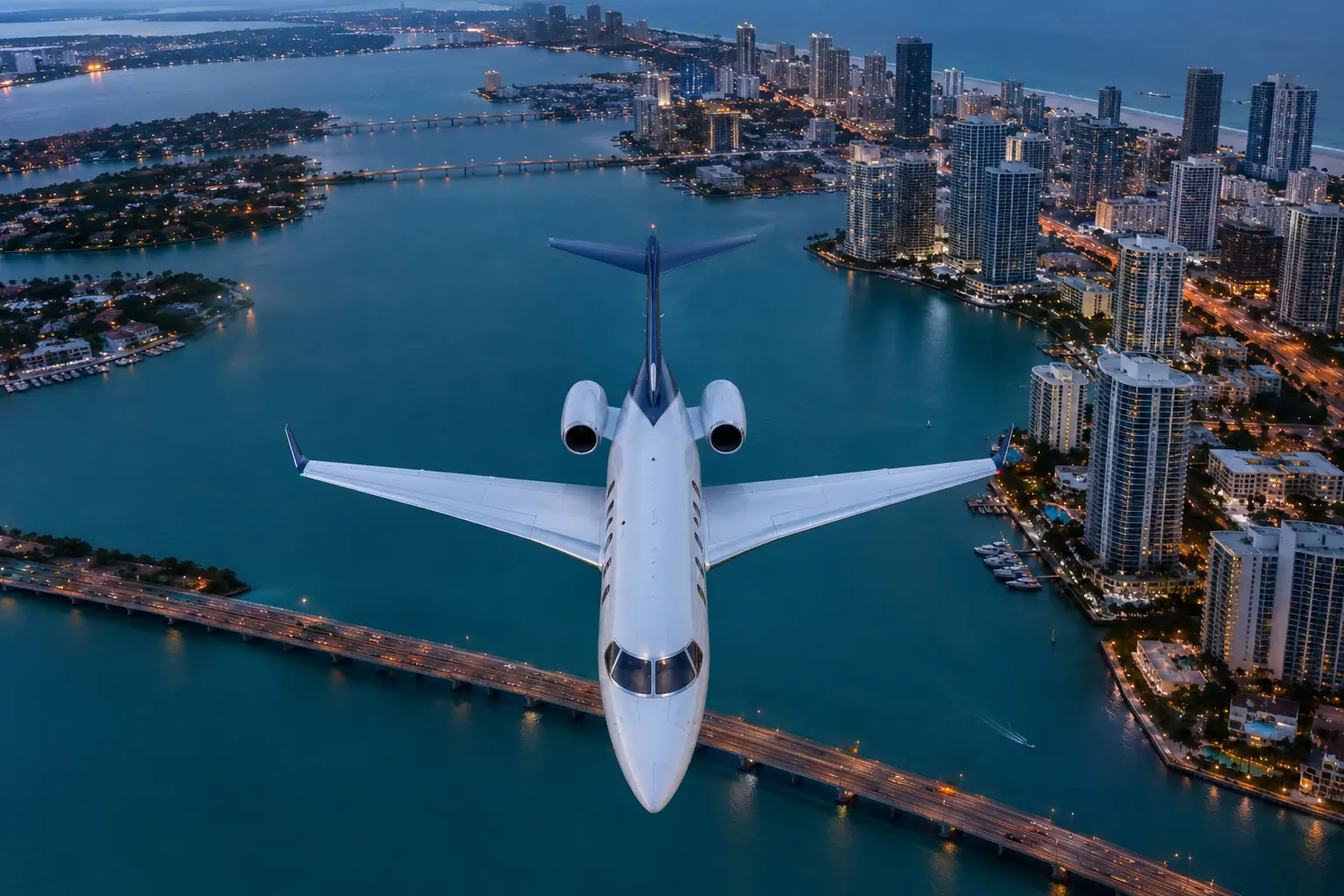
Miami → Denver
- 4h 40m
- $17,500–$27,000
- 1,479 nm
Dallas → Denver
- 1h 40m
- $6,500–$9,500
- 562 nm
Austin → Denver
- 1h 56m
- $7,500–$11,000
- 668 nm
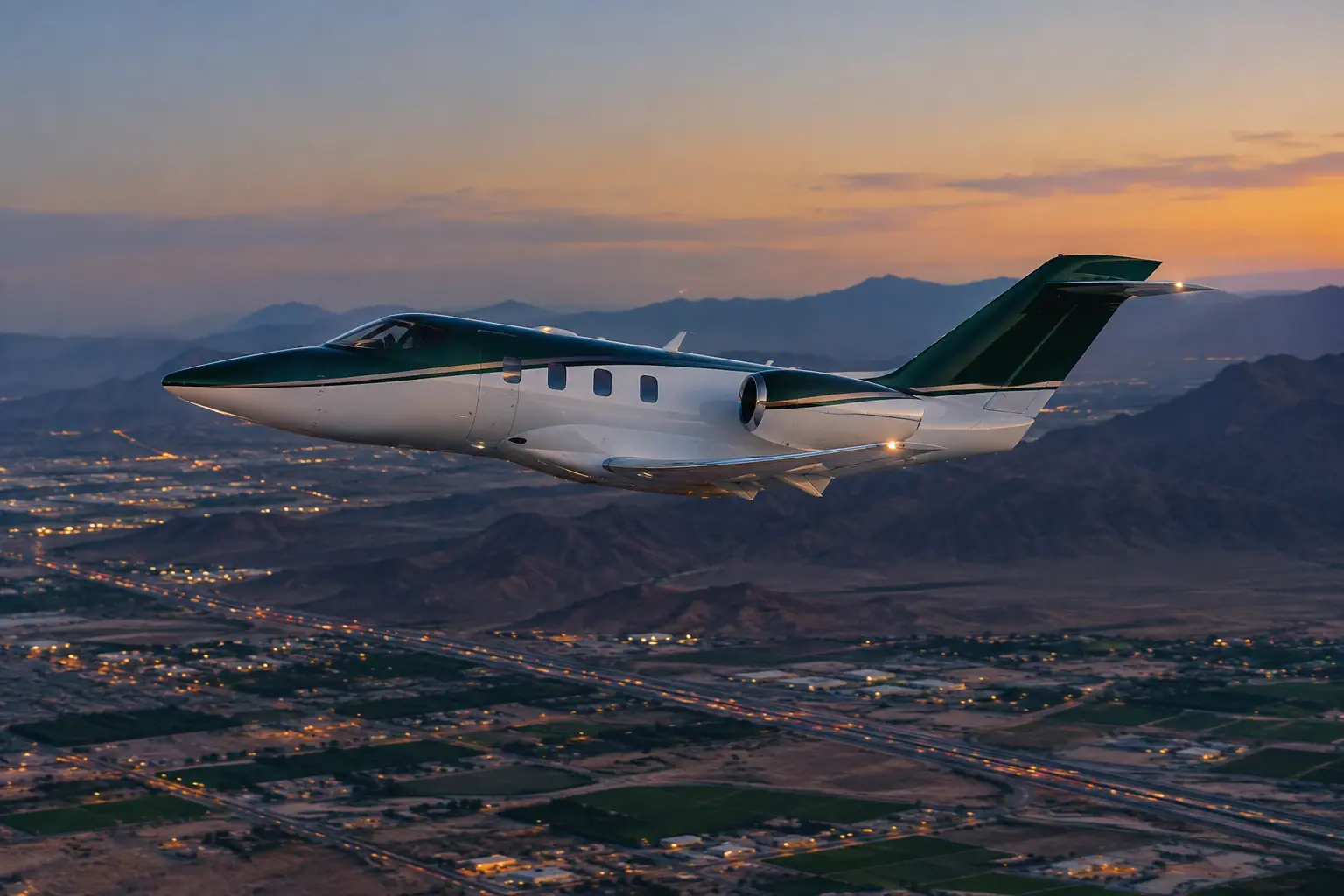
Phoenix → Denver
- 1h 32m
- $6,000–$9,000
- 505 nm
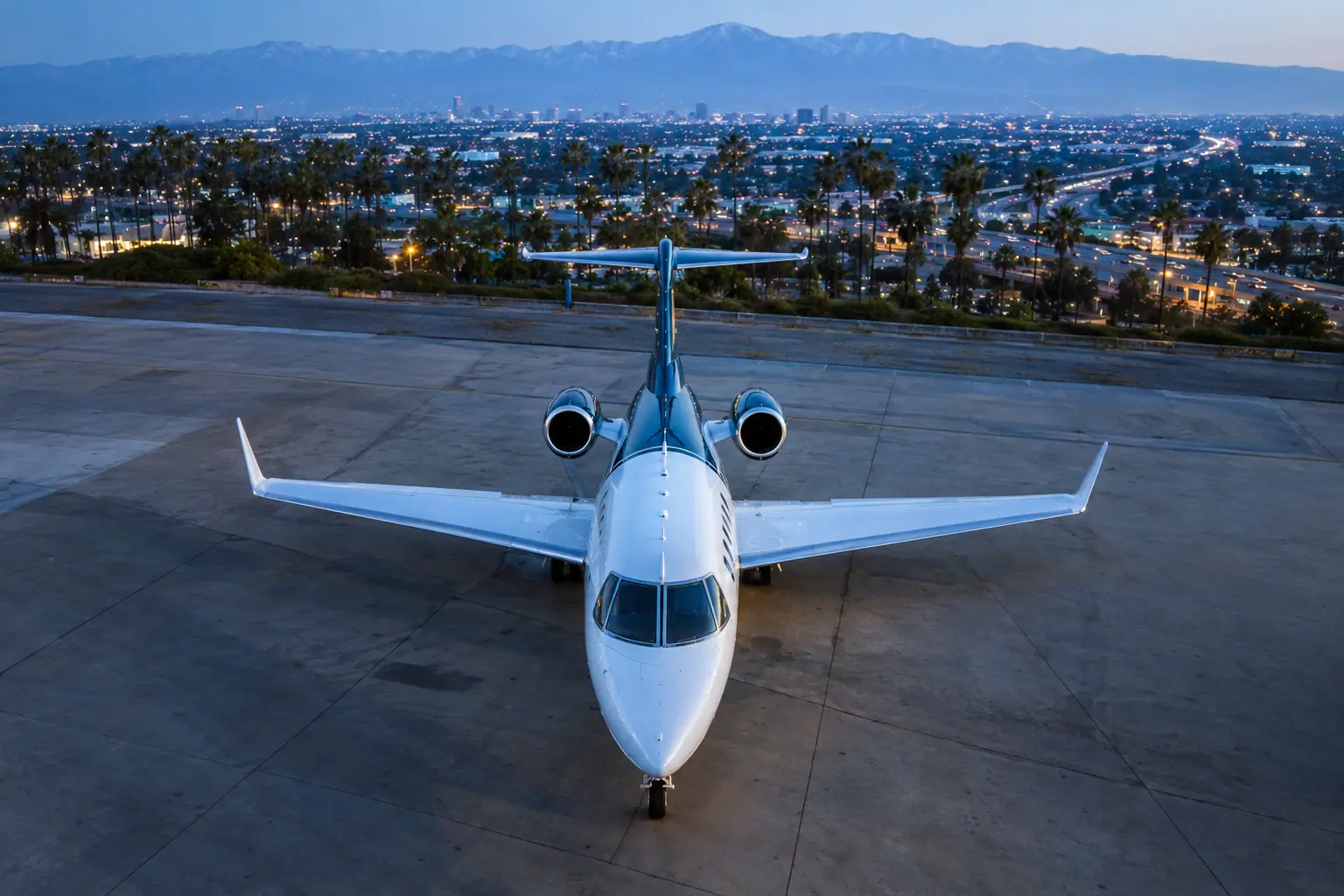
Los Angeles → Denver
- 2h 06m
- $8,000–$12,000
- 736 nm
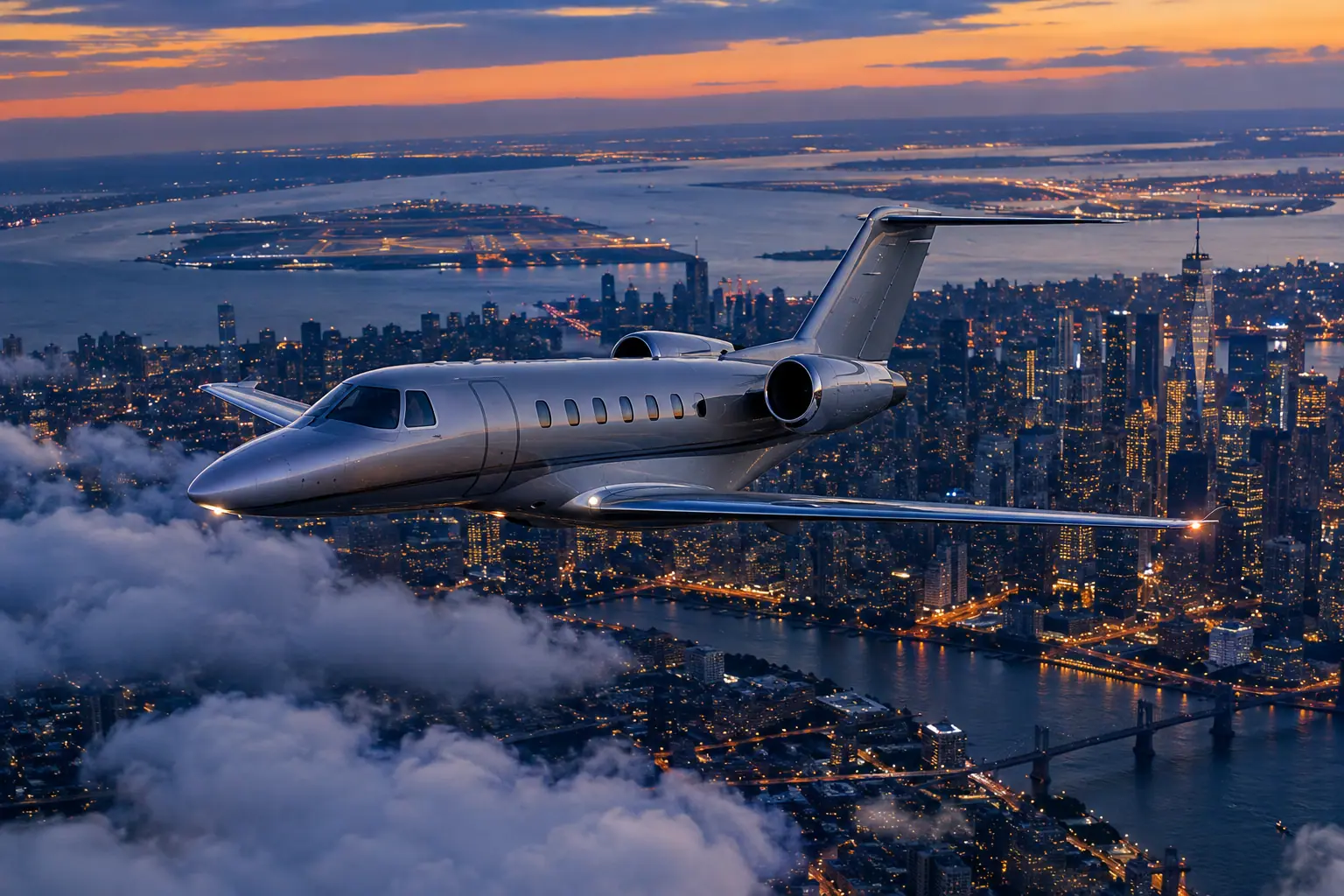
New York → Denver
- 4h 28m
- $17,000–$26,000
- 1,400 nm
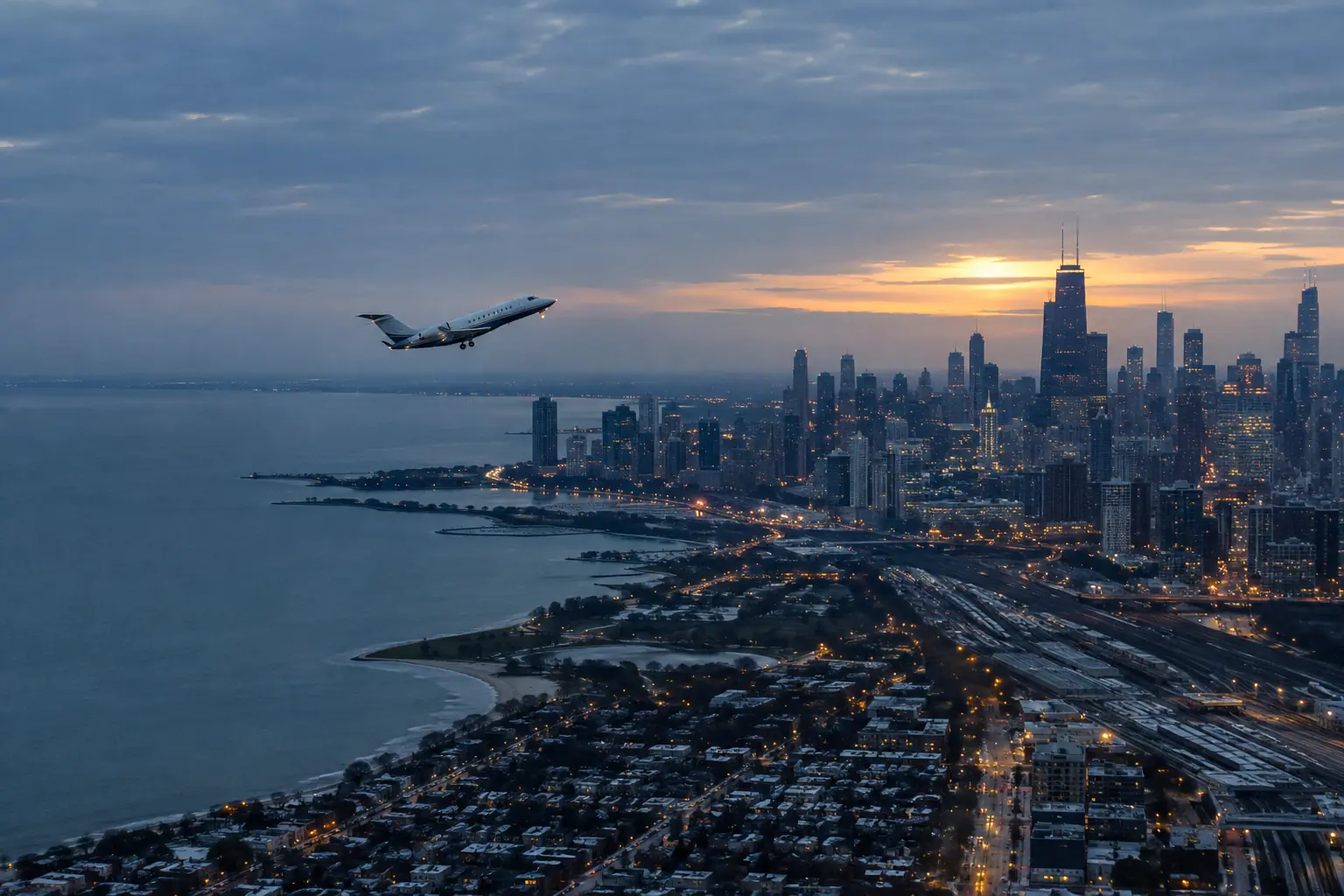
Chicago → Denver
- 2h 13m
- $8,500–$13,000
- 782 nm
Houston → Denver
- 2h 10m
- $8,000–$12,500
- 763 nm
Atlanta → Denver
- 2h 51m
- $11,000–$16,500
- 1,041 nm
Washington, DC → Denver
- 4h 08m
- $15,500–$24,000
- 1,264 nm
Boston → Denver
- 4h 45m
- $18,000–$27,500
- 1,514 nm
Philadelphia → Denver
- 4h 23m
- $16,500–$25,500
- 1,364 nm
San Francisco → Denver
- 2h 20m
- $9,000–$13,500
- 834 nm
Seattle → Denver
- 2h 29m
- $9,500–$14,500
- 893 nm
Las Vegas → Denver
- 1h 37m
- $6,000–$9,500
- 538 nm
Nashville → Denver
- 2h 27m
- $9,500–$14,000
- 881 nm
Leaving Denver for beach and desert
Denver to Cabo San Lucas covers 1,025 nm in about 2h 48m in a light jet, with estimates from $10,500 to $16,500. That is the most common winter escape from the Front Range, and it is comfortably within light jet range. Denver to Nassau runs longer at 1,630 nm and roughly 5h 02m, so many travelers move up to a super-midsize or heavy jet for cabin comfort on that duration. A Denver to Turks and Caicos flight at 1,975 nm and about 5h 52m is heavy jet territory, estimated at $22,500 to $34,000. If the return leg crosses a border, then expect the operator to file passenger manifests and confirm documentation days ahead, not hours.
Denver → Las Vegas
- 1h 37m
- $6,000–$9,500
- 538 nm
Denver → Los Angeles
- 2h 06m
- $8,000–$12,000
- 736 nm
Denver → New York
- 4h 28m
- $17,000–$26,000
- 1,400 nm
Denver → Phoenix
- 1h 32m
- $6,000–$9,000
- 505 nm
Denver → Nassau
- 5h 02m
- $19,000–$29,000
- 1,630 nm
Denver → Cabo San Lucas
- 2h 48m
- $10,500–$16,500
- 1,025 nm
Denver → Turks and Caicos
- 5h 52m
- $22,500–$34,000
- 1,975 nm
Denver → Palm Beach
- 4h 36m
- $17,500–$26,500
- 1,457 nm
How route times and prices are estimated
Every figure on this page starts with great-circle distance between the two airports, then adds a 5 percent routing allowance for airways and approach patterns. We divide that by the class cruise speed, add 0.3 hours for taxi, climb and descent, and apply the hourly rate range for the aircraft class, subject to a one-hour minimum. A 505 nm Denver to Phoenix leg at 430 knots works out near 1h 32m once taxi and climb are included.
Prices are estimates, not quotes. Hourly rates run from $2,200 to $3,500 for turboprops and $9,500 to $14,500 for heavy jets, and the spread inside a class reflects aircraft age, cabin and availability. We act as your agent under DOT Part 295; the flying is done by FAA Part 135 operators who hold operational control and their own maintenance and crew standards. If a route, date or party size falls outside a class's practical limits, then we say so and price the next class up rather than book something that will not work.
Questions
What are the most common private jet charter routes Denver travelers book?
The busiest pairs are Phoenix at 505 nm and about 1h 32m, Las Vegas at 538 nm and roughly 1h 37m, and Los Angeles at 736 nm and about 2h 06m. Dallas, Austin and Chicago follow closely. Long-haul demand centers on New York at 1,400 nm and about 4h 28m, plus Boston and Washington, DC.
How much does a private jet charter from Denver to New York cost?
Light jet estimates run $17,000 to $26,000 for the 1,400 nm leg, with about 4h 28m of flight time. A midsize or super-midsize jet costs more per hour but adds cabin height and range margin for the altitude climb out of Centennial or Rocky Mountain Metropolitan. These are estimates; the operator confirms a firm price against your date.
Can a light jet fly nonstop from Denver to Turks and Caicos?
Not practically. That leg is 1,975 nm and roughly 5h 52m, well beyond typical light jet range, so it calls for a super-midsize or heavy jet. Heavy jet estimates land between $22,500 and $34,000. The Gulfstream G280 at 3,600 nm or the Challenger 650 at 4,000 nm both handle it without a fuel stop.
Why does density altitude matter for Denver departures?
Centennial sits at 5,885 ft and its July density altitude reaches about 9,200 ft, while Rocky Mountain Metropolitan sits at 5,673 ft. Thin air reduces lift and engine performance, which trims payload or fuel. On hot afternoons a full cabin on a long leg may need a shorter fuel load or a larger aircraft. We check this when matching aircraft.
Which Denver airport will my flight use?
It depends on the aircraft and the operator. Centennial and Rocky Mountain Metropolitan both have staffed FBOs and runways of 10,001 ft and 9,000 ft respectively. Denver International has a 16,000 ft runway but no general aviation FBOs on our list, and Buckley Space Force Base is a military field. We confirm the actual departure point in your quote.
How far ahead should I book a charter out of Denver?
For common legs like Phoenix or Las Vegas, a few days often works. For heavy jets and international legs such as Nassau or Turks and Caicos, allow more lead time so the operator can arrange customs paperwork and crew. If your dates are fixed around a holiday or a ski weekend, then earlier is better because Denver aircraft get pulled toward mountain demand.