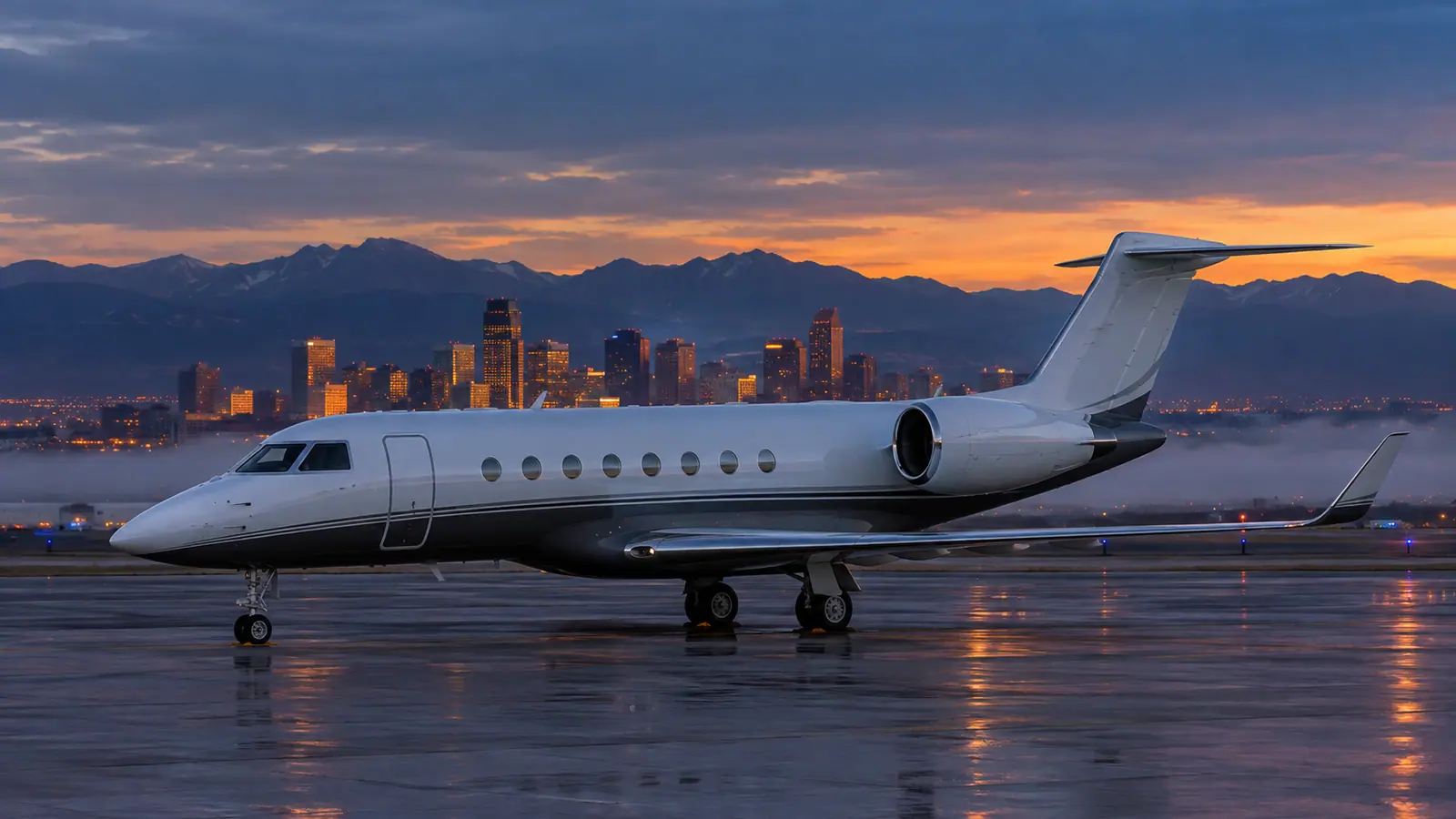
Private Jet Charters Denver
Private jet charters Denver give you access to four airports around the metro. A light jet from Dallas runs about 1 hour 40 minutes and $6,500 to $9,500. This page explains costs, aircraft, and mountain-airport trade-offs.
- 24quoted legs
- 4airports
- $2,200lowest hourly estimate
- 4h 40mMiami to Denver, light jet
Estimate your trip
Select a route, number of passengers and bags to view the matching class, flight duration and a price range.
- Calls answered 24/7 by charter agents
- All flights operated by FAA Part 135 carriers
- All-in quote before you commit
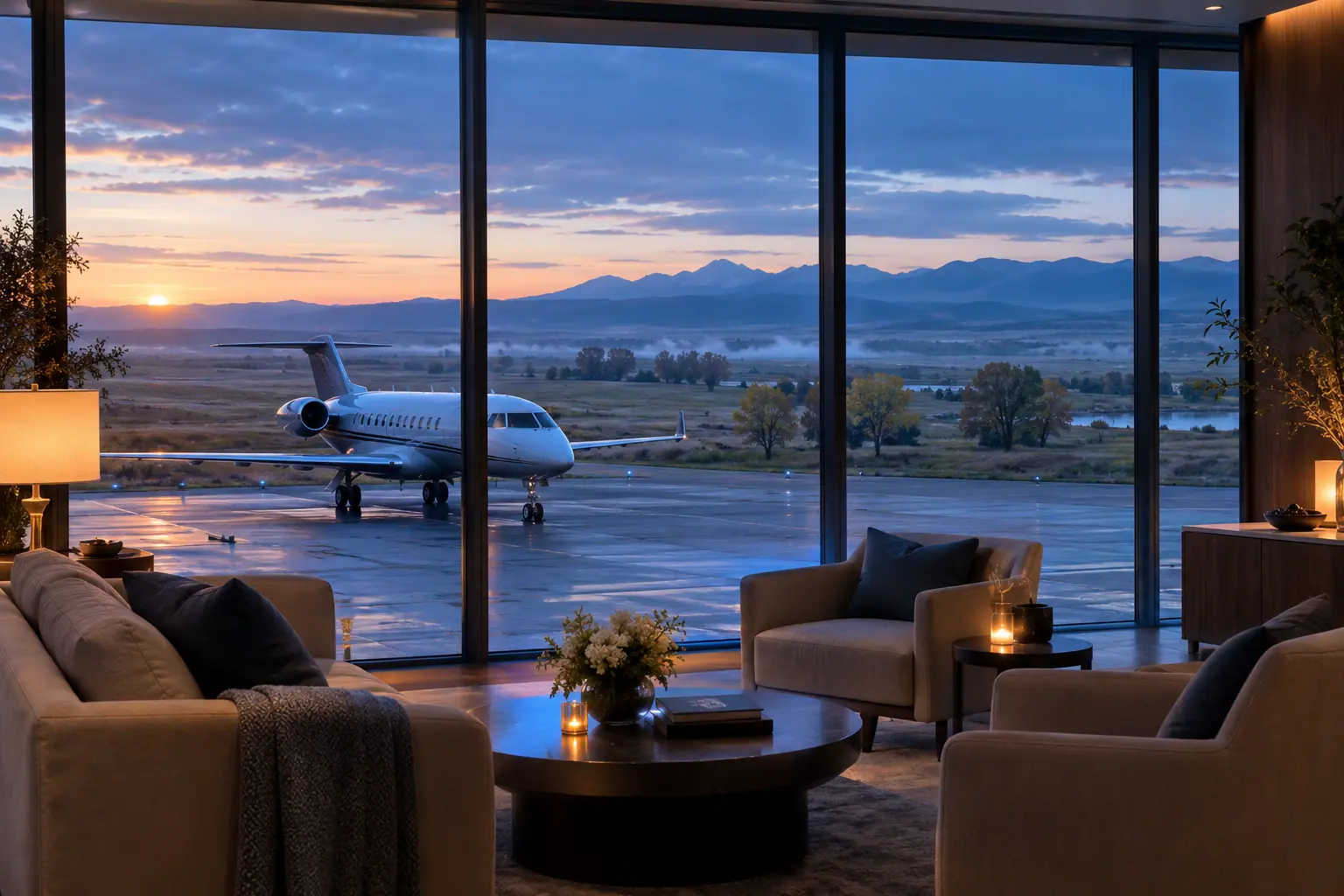
Private jet charters Denver airports
Four airports serve the metro, and the right one depends on where you live, your aircraft, and the day's temperature. Centennial sits at 5,885 feet with a 10,001-foot runway, while Rocky Mountain Metro is at 5,673 feet with 9,000 feet. Denver International has the longest runway at 16,000 feet but is built around airline traffic.
Buckley Space Force Base is a military field at 5,662 feet with an 11,006-foot runway and no public FBOs, so it is rarely the answer for civilian charters. If your group is large or your route is long, then Denver International's runway length can matter on a hot afternoon. For most travelers, Centennial and Rocky Mountain Metro are the convenient choices.
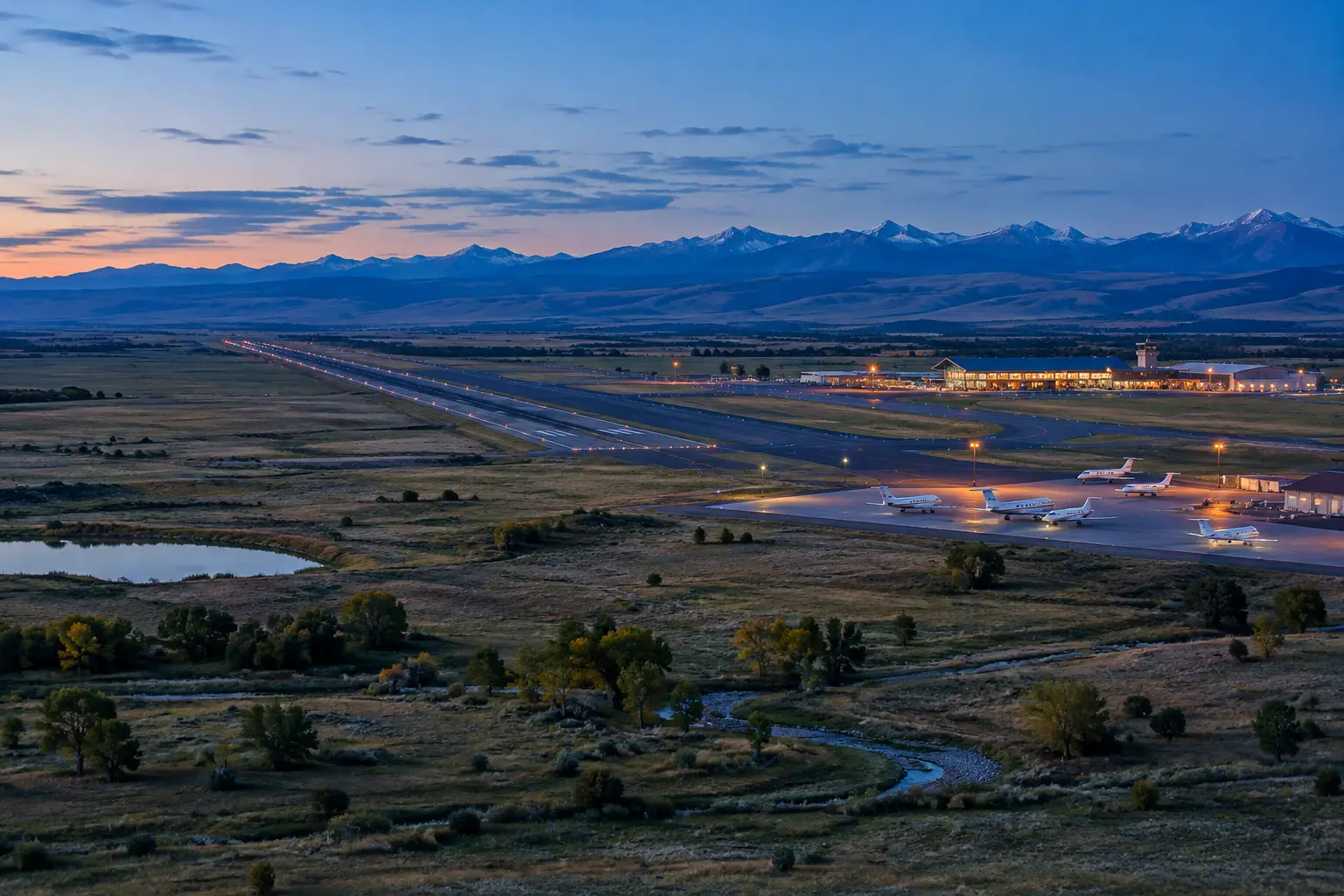
Buckley Space Force Base
- KBKF code
- 11,006 ft runway
- 13 mi to Downtown Denver
Buckley Space Force Base, elevation 5,662 feet and an 11,006-foot runway, is a military installation and not a normal civilian charter destination. It appears in airport data but should not be planned as your arrival point without specific approval. July density altitude is about 9,000 feet and peak at 115F is 9,500 feet, similar to Rocky Mountain Metro. For civilian trips, use the reliever airports instead.
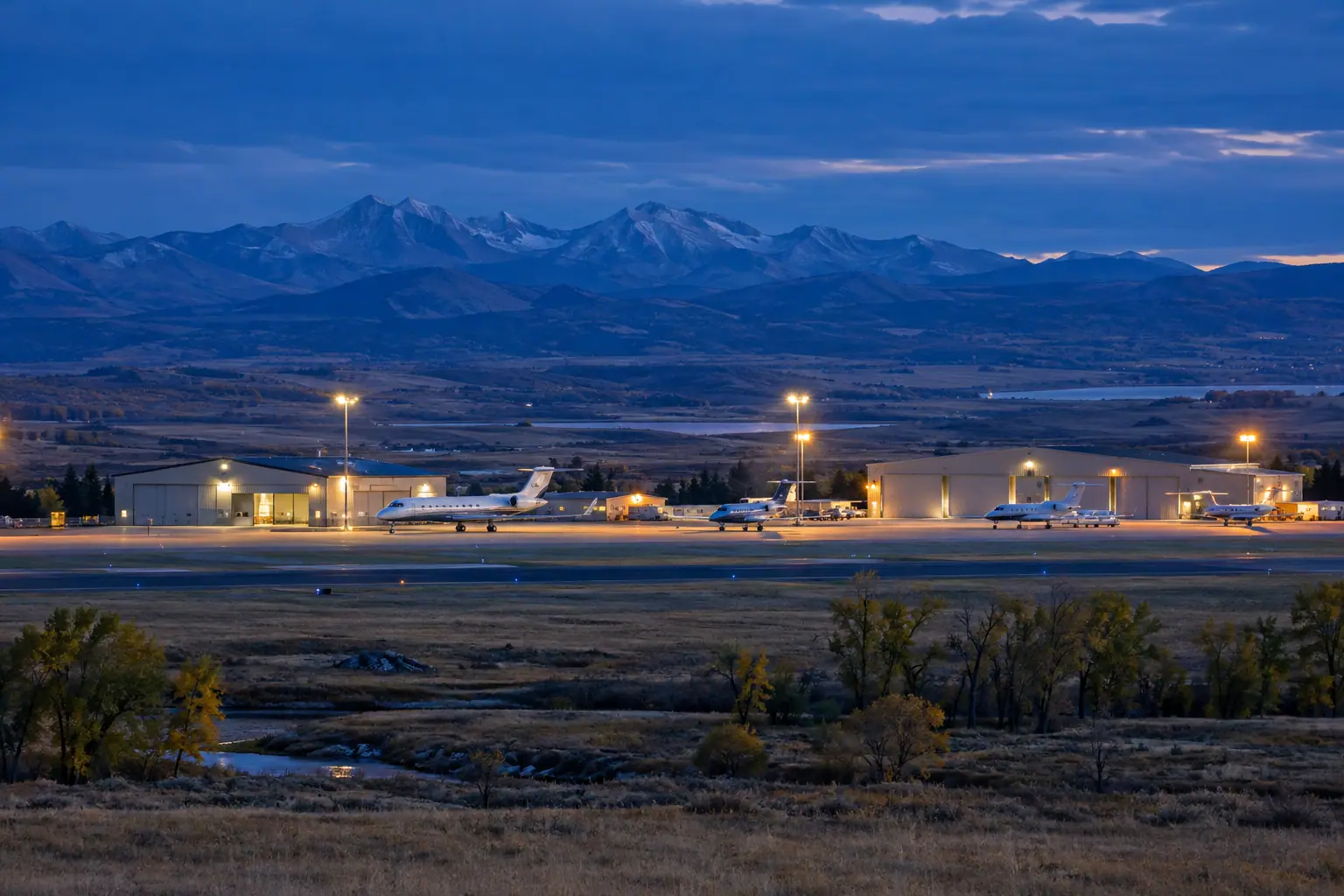
Rocky Mountain Metropolitan Airport
- KBJC code
- 9,000 ft runway
- 14 mi to Downtown Denver
Rocky Mountain Metropolitan Airport, elevation 5,673 feet and a 9,000-foot runway, sits north of the city near Broomfield and works well for Boulder, Westminster, and Interlocken travelers. Signature Aviation, Sheltair, and Signature Aviation - North provide FBO service. July density altitude is about 9,000 feet, rising to 9,500 feet at 115F, which matters for turboprops and light jets on warm afternoons.
Centennial Airport
- KAPA code
- 10,001 ft runway
- 14 mi to Downtown Denver
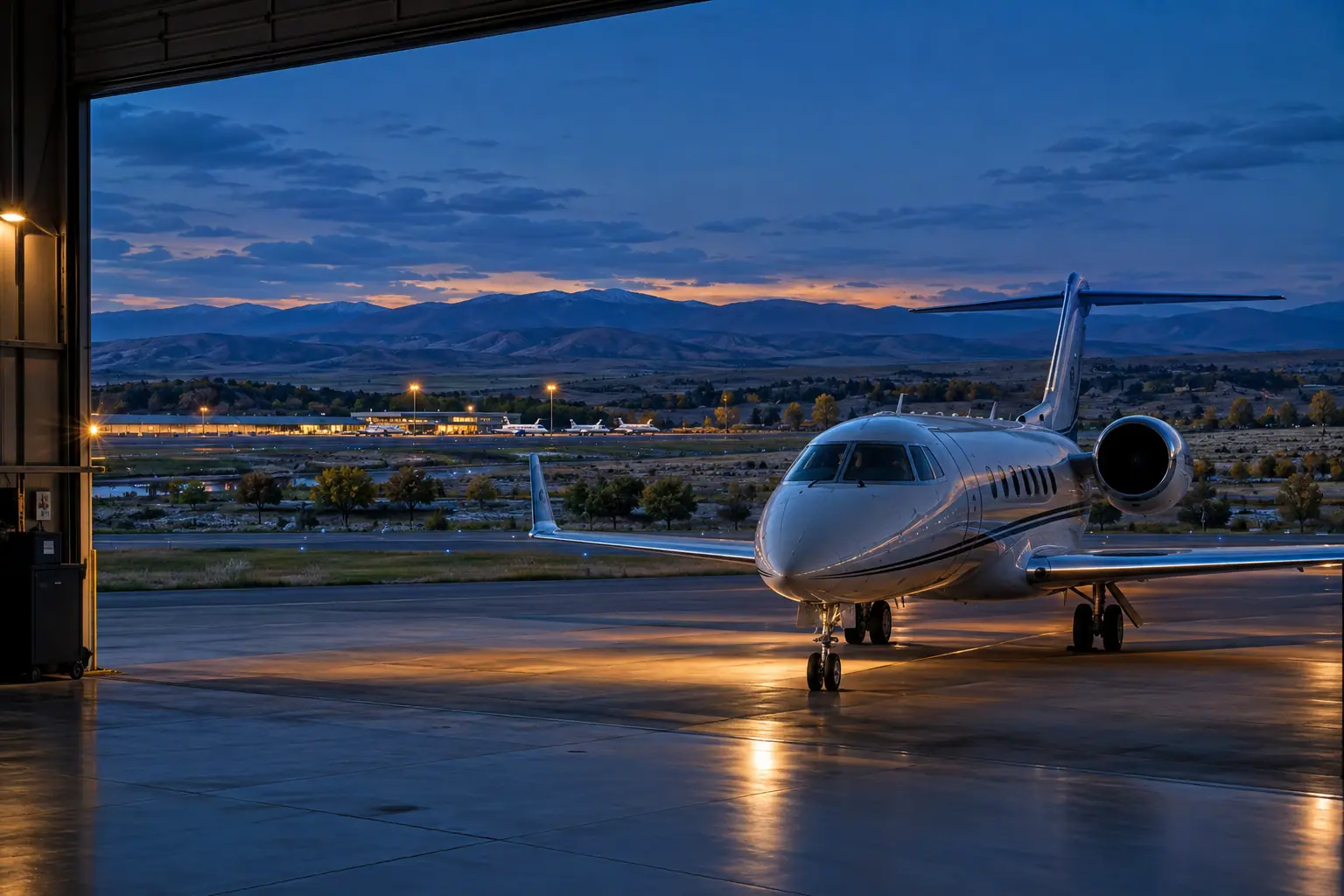
Centennial Airport, at 5,885 feet elevation with a 10,001-foot runway, is the busiest general aviation field in the metro and the usual pick for south Denver and the Tech Center. Three FBOs serve it: jetCenters of Colorado, Modern Aviation, and Signature Aviation - North. Summer density altitude reaches about 9,200 feet in July and up to 9,800 feet at 115F, so takeoff performance on light jets deserves a real look before you book a hot-weather departure.
Denver International Airport
- KDEN code
- 16,000 ft runway
- 18 mi to Downtown Denver
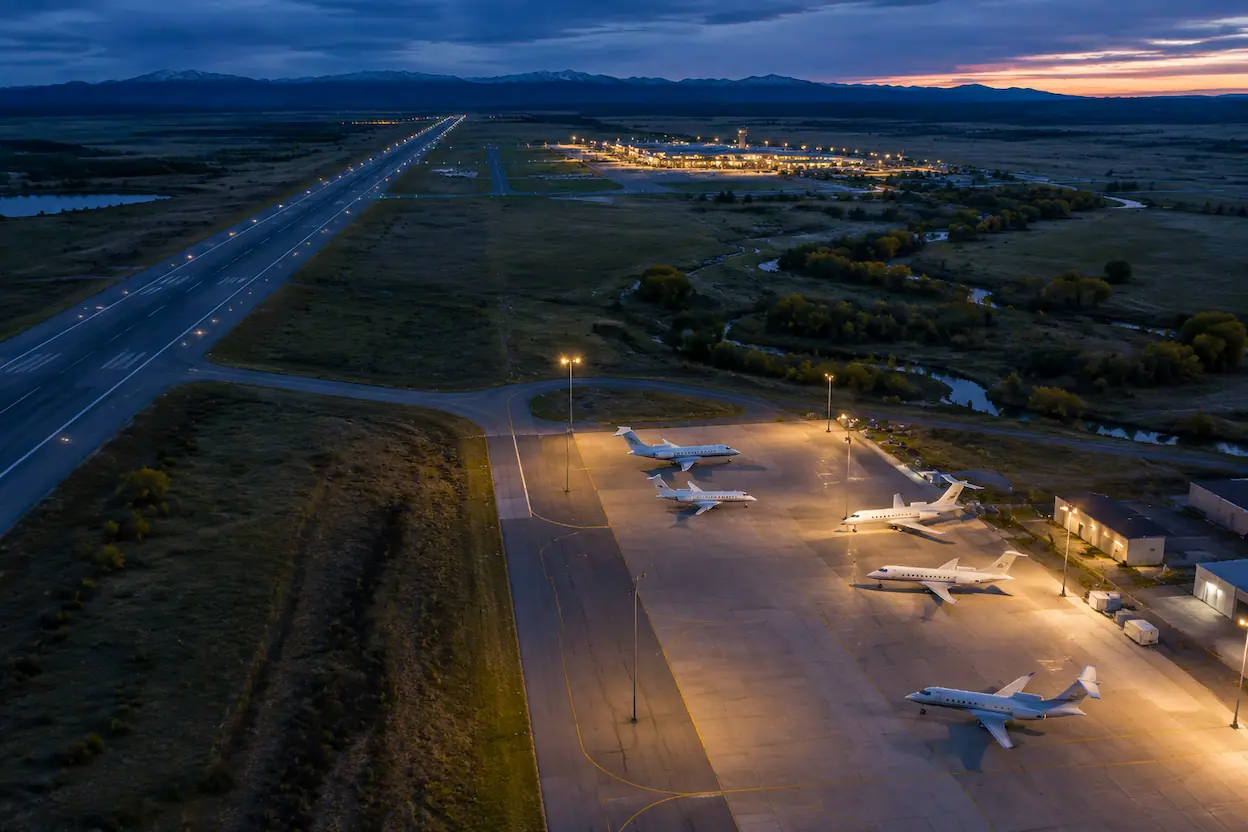
Denver International Airport, at 5,431 feet with a 16,000-foot runway, is the metro's airline hub and the fallback when you need the longest runway or a specific commercial connection. There are no dedicated public FBOs listed here for charter handling, so ground arrangements differ from the reliever fields. July density altitude is roughly 8,700 feet, the lowest of the four, which helps on hot days with heavy fuel loads.
When Denver charter demand peaks
Demand peaks around ski season and summer, so book early if your dates are fixed. December through February and the July stretch are the busiest windows, and aircraft availability tightens first on light and midsize jets. Holiday weeks are the hardest to fill at short notice.
Shoulder months can be easier: September has 4 wet days and mild highs around 82F, and April and October offer decent conditions with fewer travelers. If your schedule is flexible, then a September or October departure often gives you more aircraft choices and better pricing. Ask about repositioning opportunities on the day you want to fly.
Aircraft classes for Denver flights
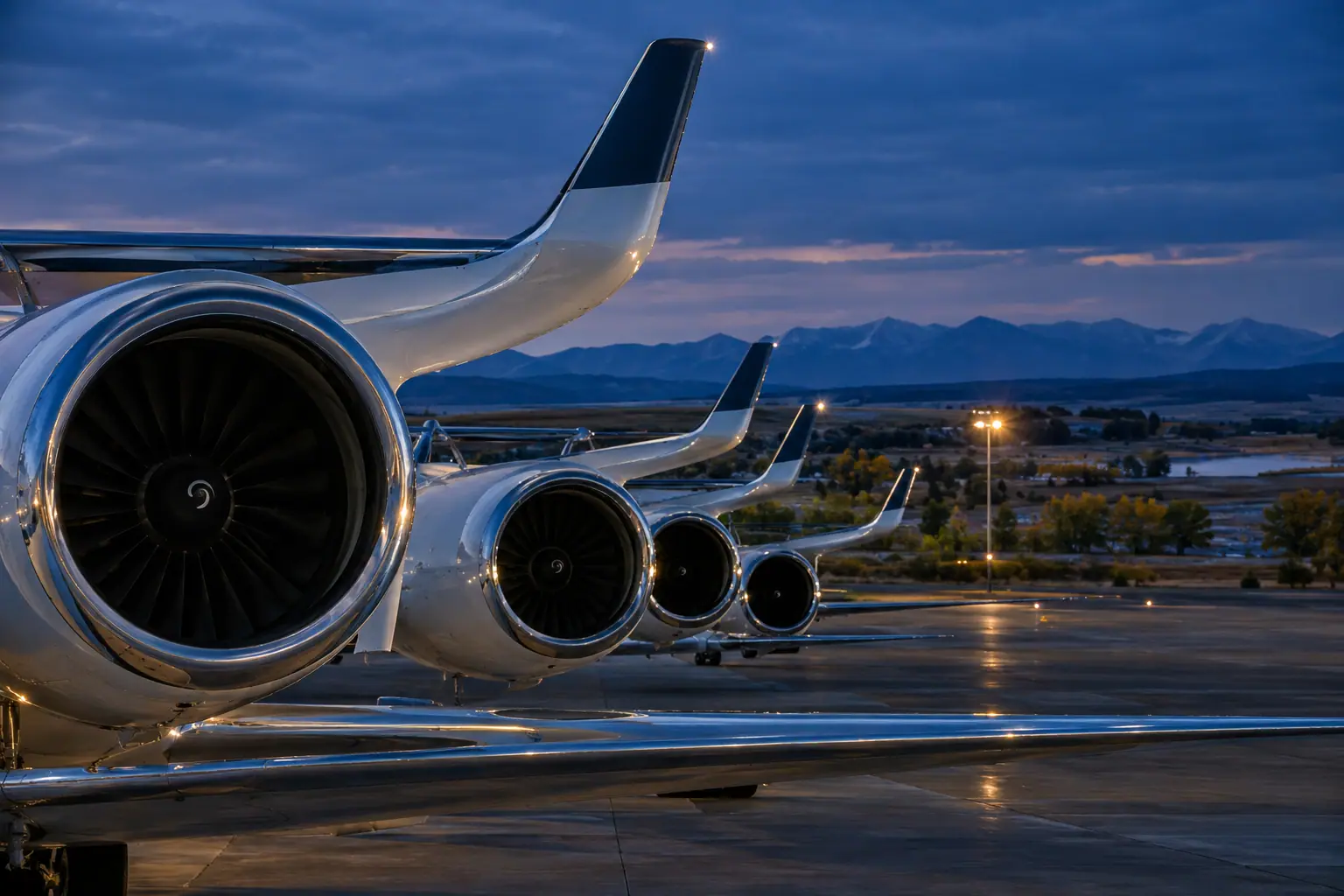
Turboprops and light jets handle most Denver regional work, while midsize, super-midsize, and heavy jets cover longer legs and larger groups. Light jets seat 4 to 7 passengers and fly about 1,400 nautical miles, which covers Phoenix, Dallas, and Las Vegas comfortably. A midsize jet seats 7 to 9 and reaches 2,100 nautical miles, enough for Chicago or Los Angeles with margin.
For transcontinental or Caribbean trips, super-midsize and heavy jets matter: 3,200 to 4,000 nautical miles of range and cabins for 8 to 14. A heavy jet is the practical choice for Denver to Nassau at 1,630 nautical miles or Turks and Caicos at 1,975. Every flight is arranged with an operator holding FAA Part 135 authority, and we act as your agent under DOT Part 295 rules for brokers.
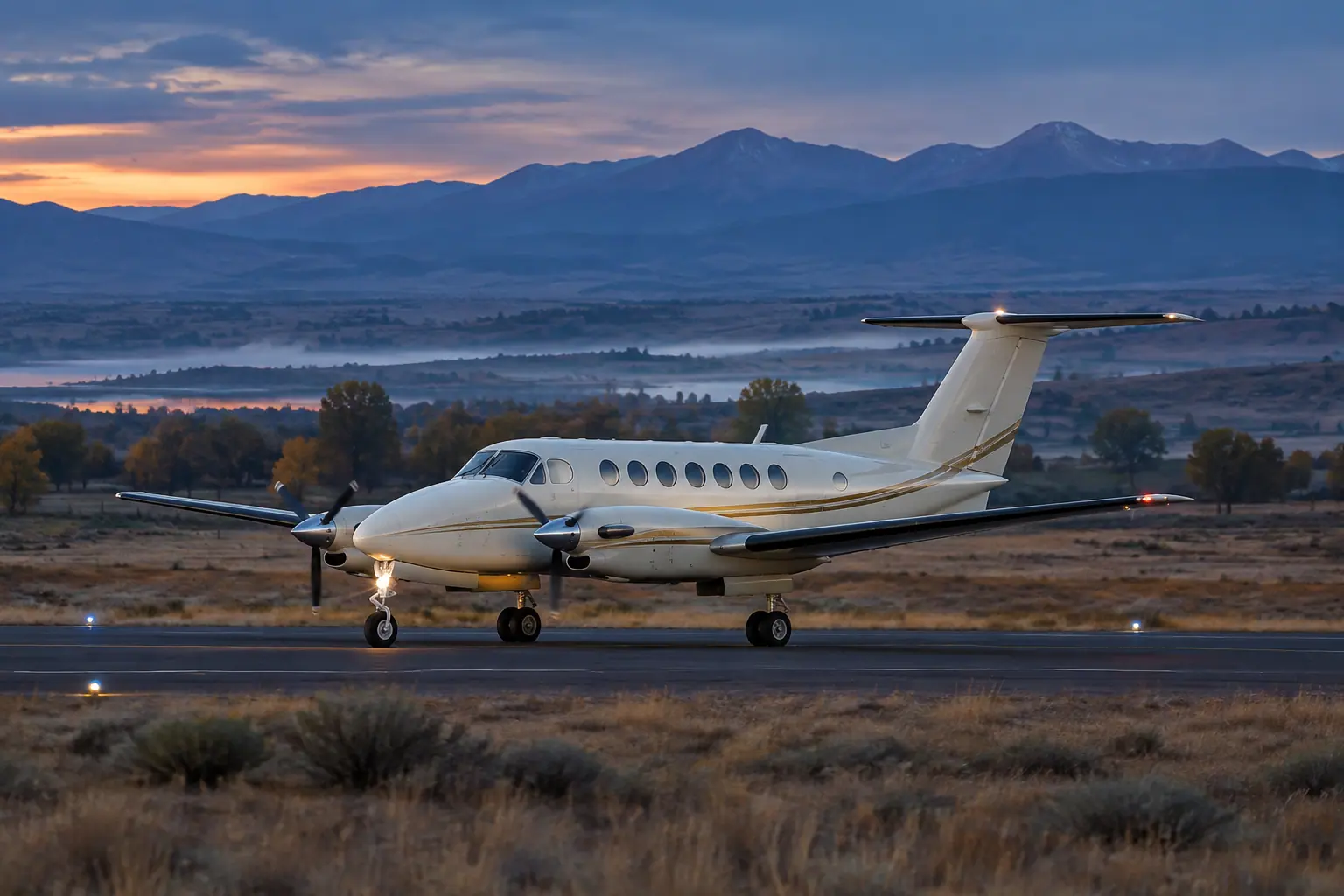
Turboprop
- 6-8 seats
- 300 kt speed
- 1,500 nm legs
Beechcraft King Air 350i, Pilatus PC-12 NGX
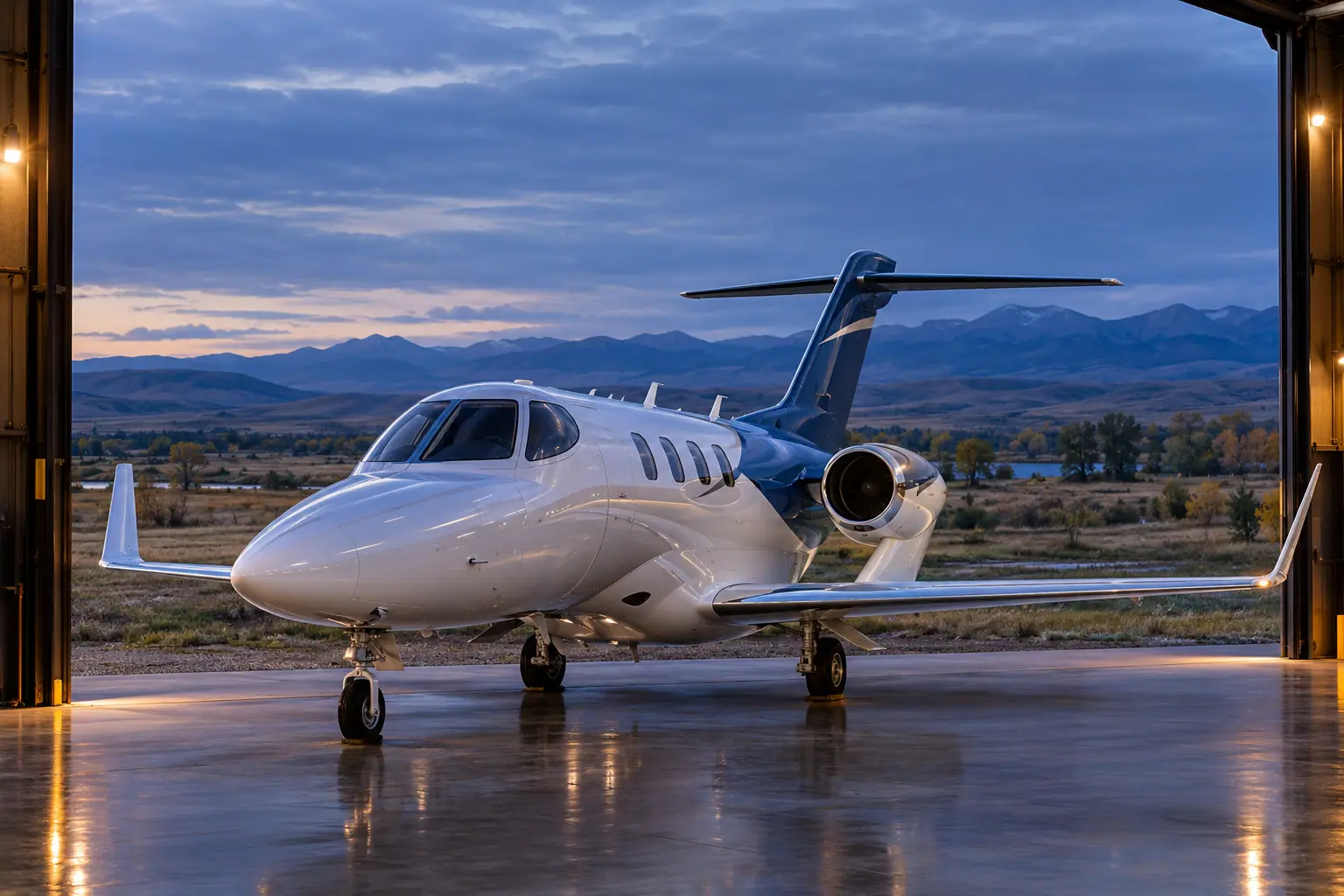
Light jet
- 4-7 seats
- 430 kt speed
- 1,400 nm legs
Cessna Citation CJ4 Gen2, Embraer Phenom 300E
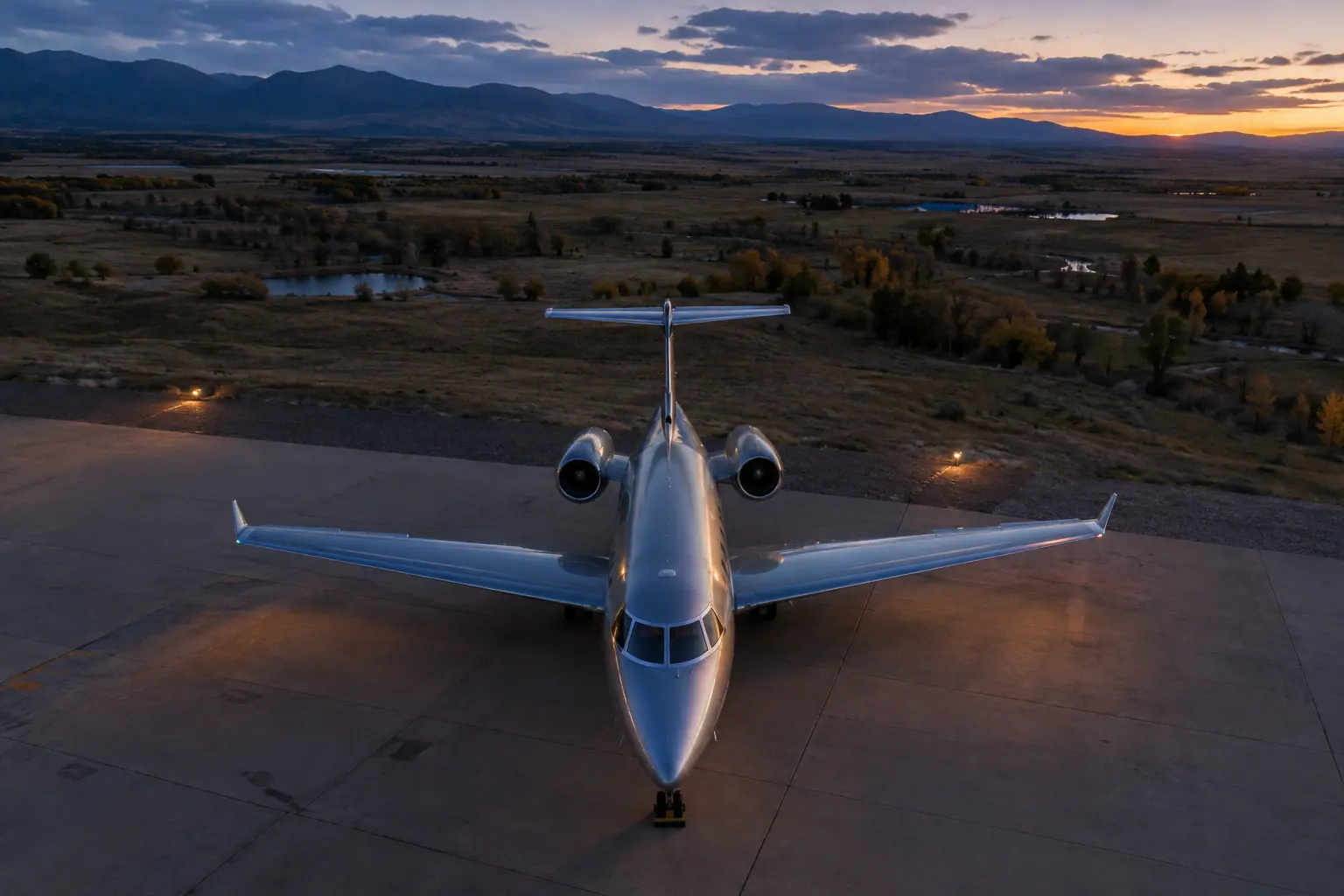
Midsize jet
- 7-9 seats
- 440 kt speed
- 2,100 nm legs
Hawker 800XP, Cessna Citation XLS+
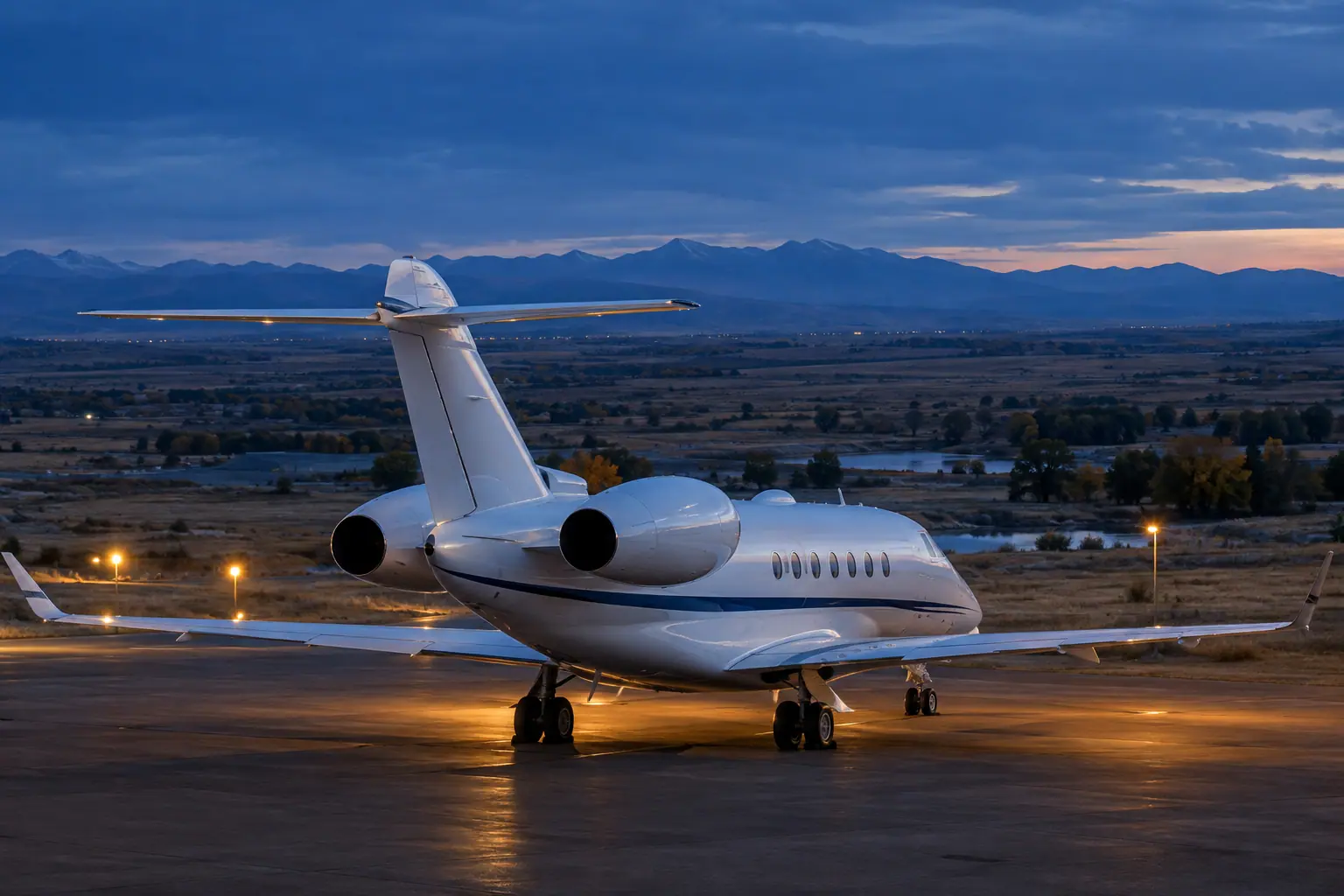
Super-midsize jet
- 8-10 seats
- 470 kt speed
- 3,200 nm legs
Gulfstream G280, Cessna Citation X+
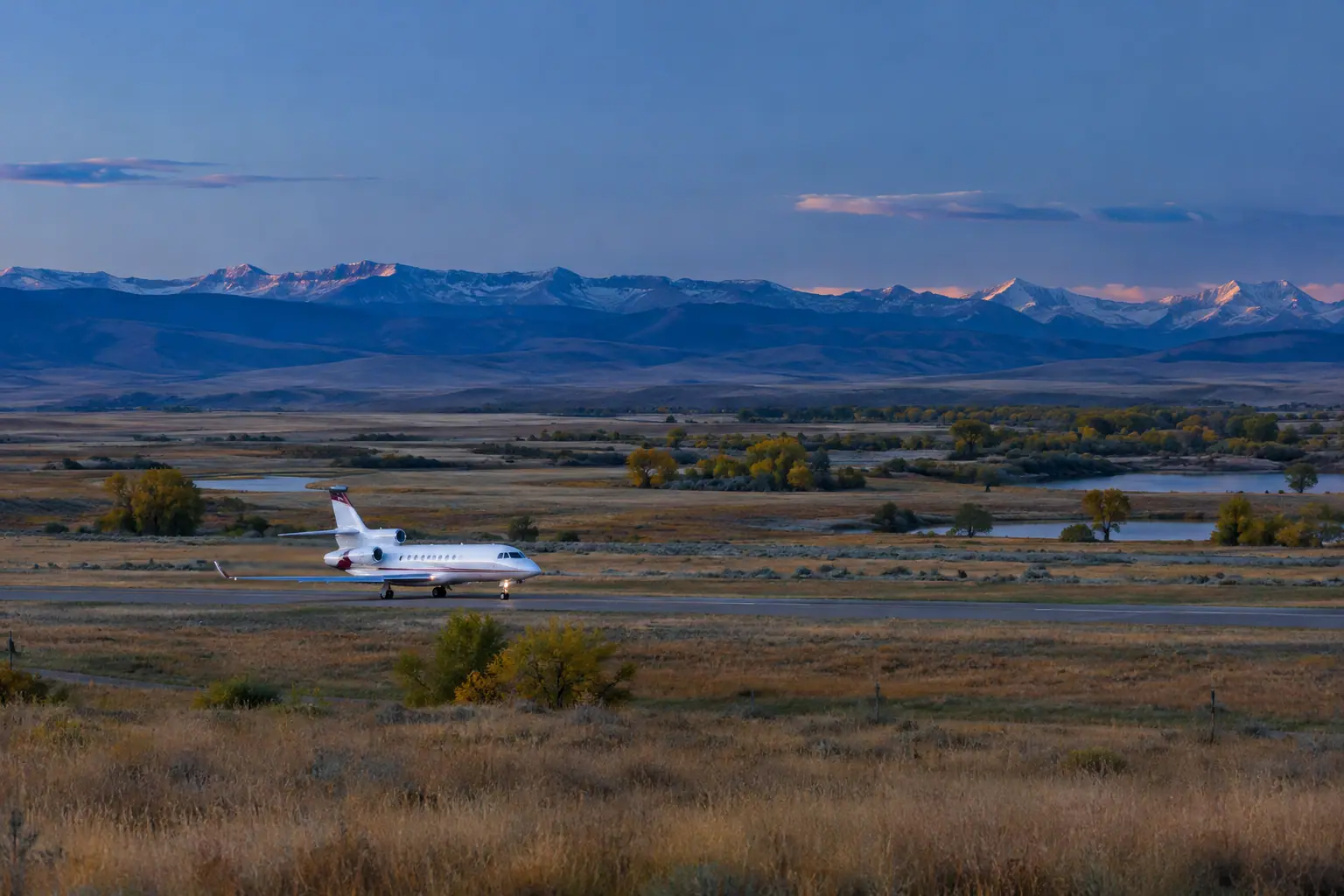
Heavy jet
- 10-14 seats
- 470 kt speed
- 4,000 nm legs
Bombardier Challenger 650, Dassault Falcon 900LX
Popular routes from Denver
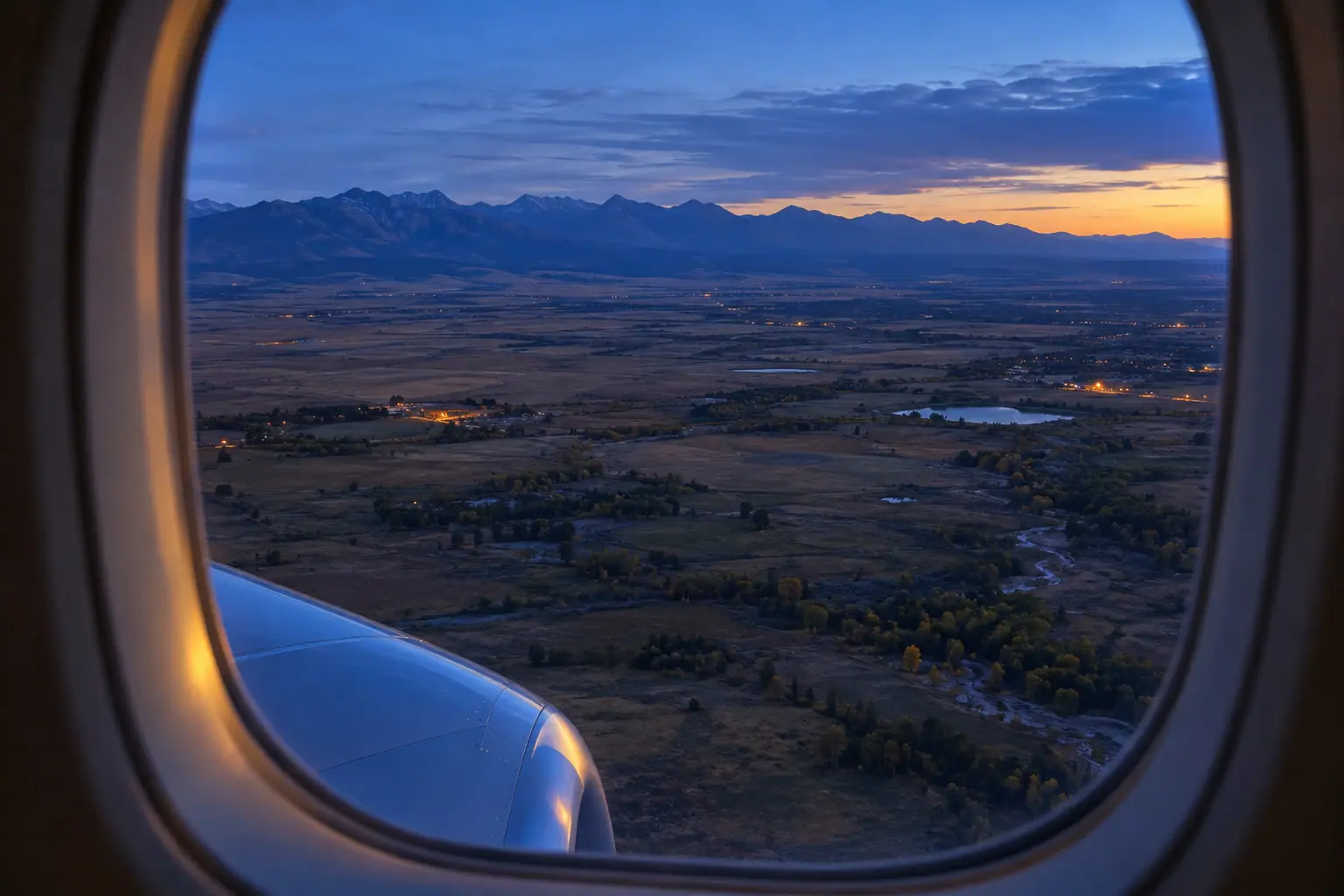
The busiest Denver charter routes are short western hops and longer business legs, with Phoenix at 505 nautical miles and about 1 hour 32 minutes the most common light jet trip. Dallas at 562 nautical miles and Austin at 668 are close behind, each inside two hours. Las Vegas is similar in distance at 538 nautical miles.
Eastbound, Chicago is 782 nautical miles and roughly 2 hours 13 minutes, Atlanta 1,041 and about 2 hours 51 minutes, and New York 1,400 and about 4 hours 28 minutes. For beach trips, Cabo San Lucas at 1,025 nautical miles and about 2 hours 48 minutes is the easiest international leg. International arrivals need CBP clearance, so build that into the schedule rather than treating it as an afterthought.
- Miami → Denver4h 40m
- Dallas → Denver1h 40m
- Austin → Denver1h 56m
- Phoenix → Denver1h 32m
- Los Angeles → Denver2h 06m
- New York → Denver4h 28m
- Chicago → Denver2h 13m
- Houston → Denver2h 10m
- Atlanta → Denver2h 51m
- Washington, DC → Denver4h 08m
- Boston → Denver4h 45m
- Philadelphia → Denver4h 23m
- San Francisco → Denver2h 20m
- Seattle → Denver2h 29m
- Las Vegas → Denver1h 37m
- Nashville → Denver2h 27m
- Denver → Las Vegas1h 37m
- Denver → Los Angeles2h 06m
- Denver → New York4h 28m
- Denver → Phoenix1h 32m
- Denver → Nassau5h 02m
- Denver → Cabo San Lucas2h 48m
- Denver → Turks and Caicos5h 52m
- Denver → Palm Beach4h 36m
Heat and density altitude in Denver
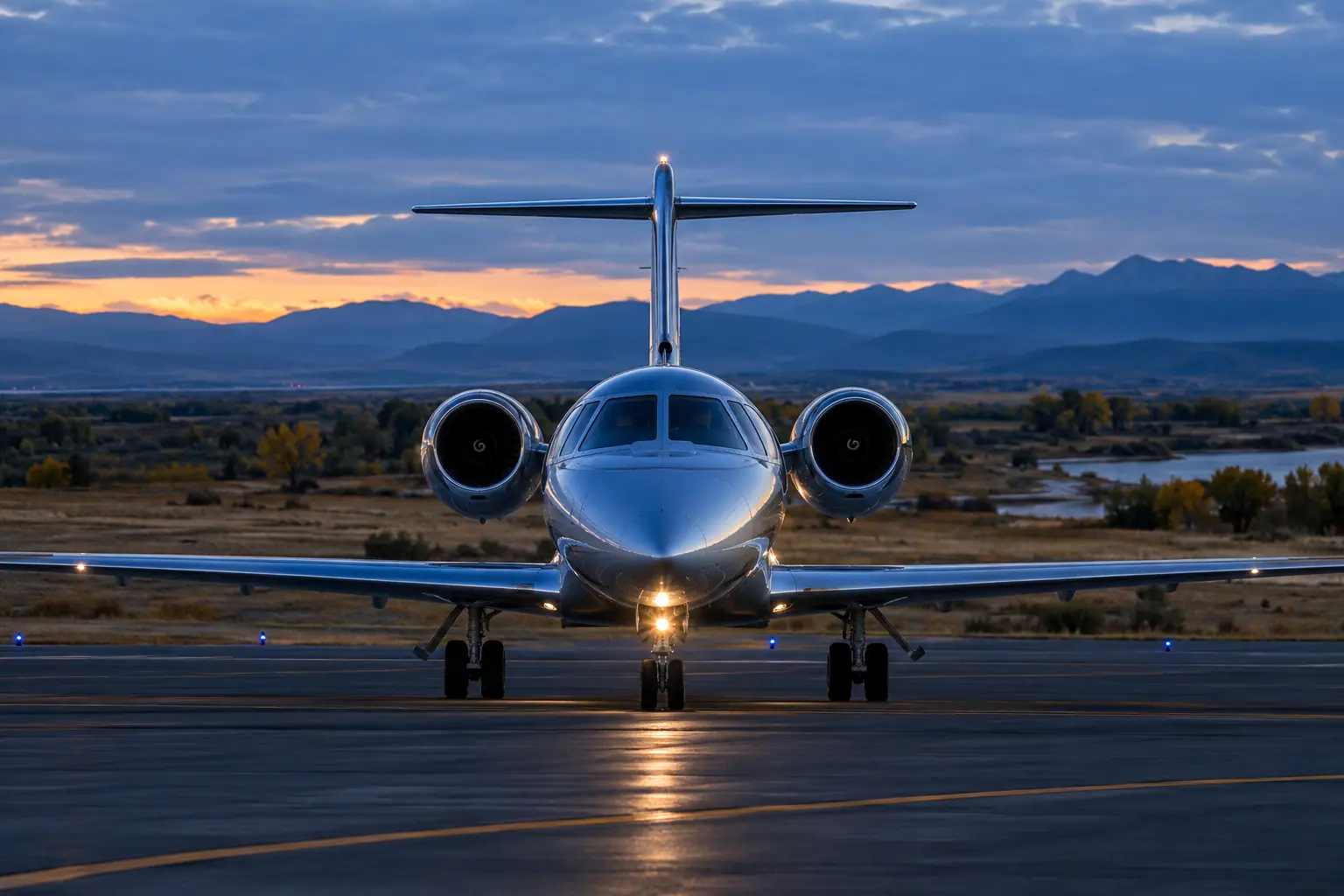
Denver's elevation makes heat a performance issue, not just a comfort one: July highs average 88F and density altitude reaches about 9,000 feet, rising to 9,800 feet at 115F at Centennial. If you depart on a hot afternoon with a full cabin and full fuel, then the aircraft may need a runway longer than the schedule assumed. That is a trade-off to discuss before you pick the plane.
June, July, and August each bring about 7 wet days, and afternoon thunderstorms build quickly along the Front Range. Morning departures are usually the safer bet in summer, when the air is cooler and the storms have not yet formed. Winter is different: December through February highs run 41F to 44F, with 4 to 6 wet days a month, so de-icing and mountain-wave winds can affect timing.
Spring and fall are the swing months, with May at 12 wet days and October at 5. If your trip is weather-sensitive, then build a buffer into the day rather than scheduling the last flight out. The numbers here are estimates for planning, and the operator makes the final call on performance and dispatch.
| Month | Avg high | Wet days | KBKF DA | KBJC DA | KAPA DA |
|---|---|---|---|---|---|
| Jan | 41°F | 5 | 5,800 ft | 5,800 ft | 6,100 ft |
| Feb | 43°F | 6 | 6,000 ft | 6,000 ft | 6,200 ft |
| Mar | 52°F | 8 | 6,600 ft | 6,600 ft | 6,800 ft |
| Apr | 61°F | 8 | 7,200 ft | 7,200 ft | 7,400 ft |
| May | 68°F | 12 | 7,600 ft | 7,600 ft | 7,900 ft |
| Jun | 83°F | 7 | 8,600 ft | 8,600 ft | 8,900 ft |
| Jul | 88°F | 7 | 9,000 ft | 9,000 ft | 9,200 ft |
| Aug | 87°F | 7 | 8,900 ft | 8,900 ft | 9,200 ft |
| Sep | 82°F | 4 | 8,600 ft | 8,600 ft | 8,800 ft |
| Oct | 66°F | 5 | 7,500 ft | 7,500 ft | 7,800 ft |
| Nov | 52°F | 5 | 6,600 ft | 6,600 ft | 6,800 ft |
| Dec | 44°F | 4 | 6,000 ft | 6,000 ft | 6,300 ft |
Rain days counted at 1 mm or more. DA computed at the mean afternoon peak using a rough approximation. Each operator applies its own performance figures.
What private jet charters Denver cost
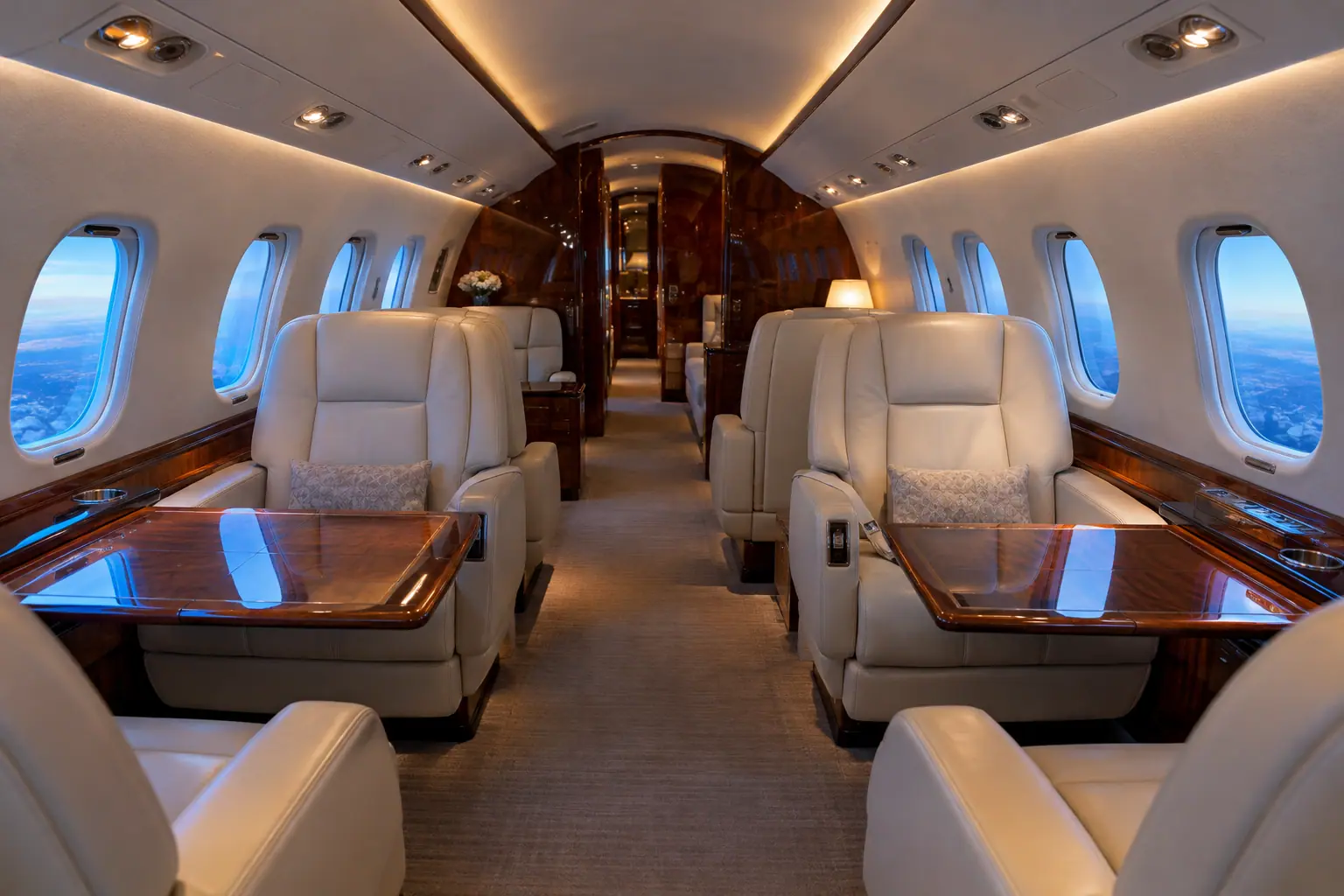
Private jet charters Denver pricing depends on aircraft class, route length, and the airport you choose, with light jets running $3,800 to $5,800 per hour and heavy jets $9,500 to $14,500. Those hourly ranges are estimates and the final quote depends on the specific tail and crew day. A turboprop starts lower, at $2,200 to $3,500 per hour, and suits short hops where a jet's speed buys little.
On a common short leg, a light jet from Phoenix to Denver covers 505 nautical miles in about 1 hour 32 minutes for $6,000 to $9,500. A longer trip, New York to Denver at 1,400 nautical miles, takes roughly 4 hours 28 minutes and $17,000 to $26,000 in the same class. If you can move your departure by a day, then an empty leg or repositioning flight may cut the price. Ask for a midsize or super-midsize comparison before you commit; the hourly spread between them is real but so is the cabin.
| Class | Seats | Hourly estimate | Miami → Denver |
|---|---|---|---|
| Turboprop | 6-8 | $2,200–$3,500 | $13,500–$22,000 |
| Light jet | 4-7 | $3,800–$5,800 | $17,500–$27,000 |
| Midsize jet | 7-9 | $5,200–$7,800 | $20,000–$30,000 |
| Super-midsize jet | 8-10 | $7,200–$10,000 | $26,000–$36,000 |
| Heavy jet | 10-14 | $9,500–$14,500 | $34,000–$52,500 |
How booking works
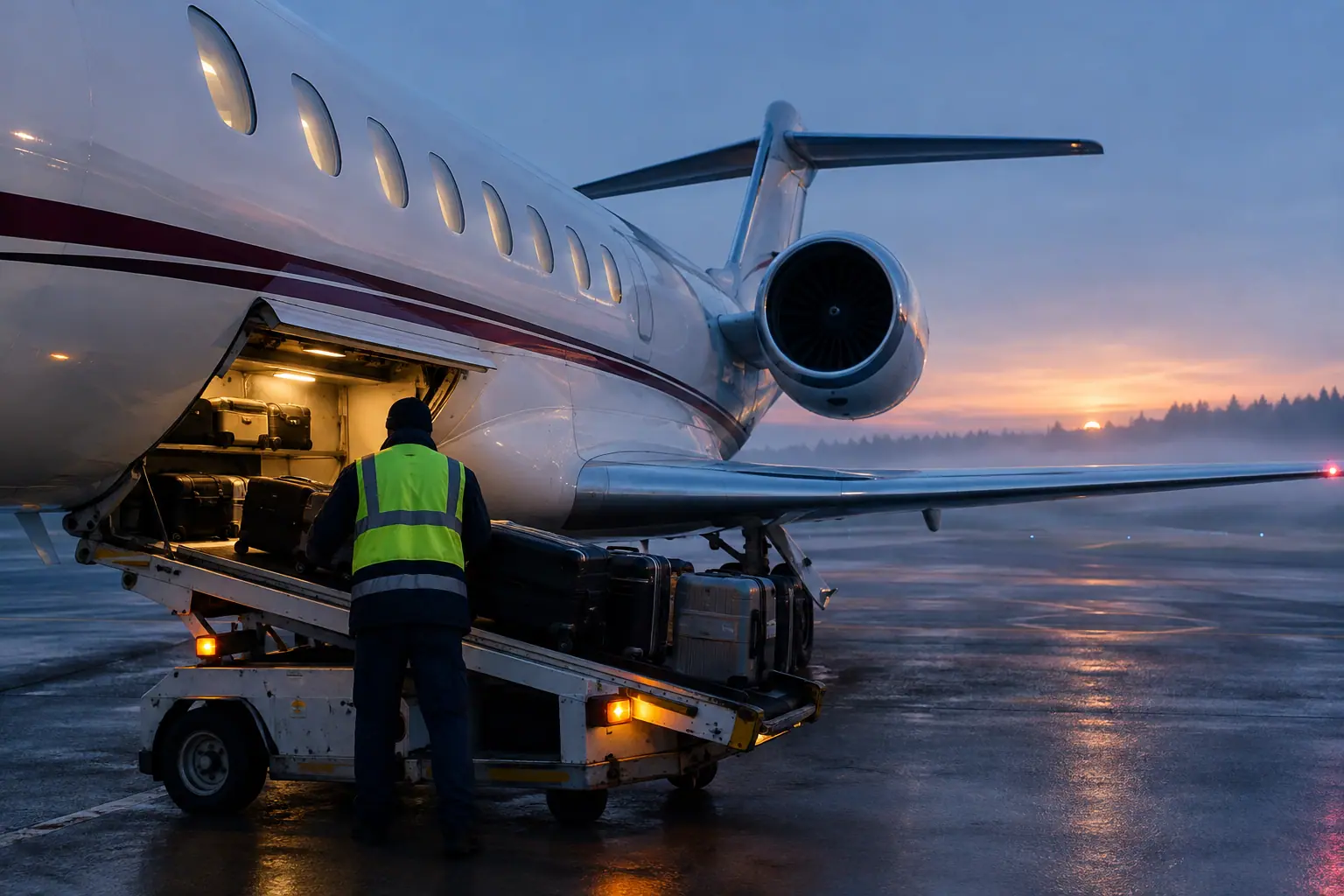
1. Tell us the trip.Share your route, dates, passenger count, and any luggage or pet needs. Denver's four airports mean the airport choice matters, so include where you are staying.
2. Compare aircraft and quotes.We return options across turboprop, light, midsize, super-midsize, and heavy jets with hourly rates and estimated totals. Ask for a second class to see the real spread.
3. Confirm the operator.You review the FAA Part 135 operator, aircraft type, and crew before you commit. We act as your agent under DOT Part 295, so the operator holds operational control.
4. Fly and clear customs.For international legs such as Cabo or Nassau, CBP clearance is built into the plan. TSA rules apply where relevant, and de-icing or density altitude adjustments are handled before departure.
Common questions
How much do private jet charters Denver trips cost?
Light jets run $3,800 to $5,800 per hour, midsize $5,200 to $7,800, and heavy jets $9,500 to $14,500. A Phoenix to Denver light jet leg of 505 nautical miles is about $6,000 to $9,500. These are estimates; the final quote depends on the aircraft, crew day, and airport fees.
Which airport should I use for a Denver charter?
Centennial (KAPA) at 5,885 feet elevation with a 10,001-foot runway is the usual pick for south Denver, and Rocky Mountain Metro (KBJC) at 5,673 feet with 9,000 feet serves the north metro. Denver International has a 16,000-foot runway but is built around airline traffic. Buckley is military and rarely usable.
Does Denver's altitude affect my flight?
Yes. July density altitude is about 9,000 feet at Rocky Mountain Metro and 9,200 at Centennial, reaching 9,800 at Centennial at 115F. Hot days reduce performance, so an operator may limit fuel or passengers or choose a longer runway. Morning departures in summer usually avoid the worst of it.
How long is a private jet flight from Denver to New York?
Denver to New York is 1,400 nautical miles and about 4 hours 28 minutes in a light jet, with estimated pricing of $17,000 to $26,000. A midsize or super-midsize jet gives more cabin comfort for that length, and the hourly rate is higher.
Can I fly internationally from Denver on a charter?
Yes. Cabo San Lucas is 1,025 nautical miles and about 2 hours 48 minutes, and Nassau is 1,630 nautical miles at roughly 5 hours 02 minutes. International legs require CBP clearance, and the aircraft must meet range and performance requirements for the route.
Who operates the aircraft for private jet charters Denver?
Flights are flown by FAA Part 135 operators who hold operational control, and we arrange the trip as your agent under DOT Part 295 broker rules. We do not own the aircraft. You will see the operator and aircraft type before you confirm.